

Why Your Biggest Failure Might Be Your Greatest Breakthrough
Discover how failure can become the turning point that unlocks growth, resilience, and success. Learn how to turn setbacks into powerful breakthroughs and come back stronger than ever.
What if the thing that just broke you was actually in the process of building you into someone you couldn’t have become any other way?
Not as a consolation prize. Not as something you’ll appreciate “someday” in some vague, distant future. But right now — buried inside the wreckage of whatever just happened — there is something real, something valuable, something that belongs specifically to you and could not have been delivered any other way.
I know how that sounds when you’re in the middle of it. It sounds like the kind of thing people say because they don’t know what else to say. It sounds like a greeting card trying to cover a wound.
But stay with me. Because this isn’t about toxic positivity or pretending your setback didn’t hurt. It hurt. It might still be hurting. That’s not the part we’re skipping.
This is about learning to read the setback — to treat it not as a verdict on your life but as a message written in a language most people never bother to learn.
The ones who learn it? They don’t just recover. They arrive somewhere better than where they were going before everything fell apart.

The Lie We’ve Been Told About Setbacks
From the time we’re young, we’re handed a very tidy narrative about success.
Work hard. Make smart decisions. Stay consistent. Success follows. Setbacks are the exception — evidence that something went wrong, that you miscalculated, that you failed in some meaningful sense that needs to be corrected before you can get back on the right path.
This story is not just incomplete. It is genuinely damaging.
Because it makes setbacks feel like deviations from the plan rather than what they actually are: part of the architecture of growth itself. Not a detour around the destination. The road that actually leads there.
Think about every person you genuinely admire — not for their highlight reel, but for their depth. Their steadiness. The quiet confidence they carry that seems to come from somewhere real. Now think about what they’ve been through. Not what they’ve achieved. What they’ve survived.
Almost without exception, the thing that made them who they are wasn’t the wins. It was the losses they didn’t let finish them.
The setback didn’t happen to them. It happened for them. And the difference between those two words is the entire difference between someone who grows and someone who just endures.
Why Your Brain Is Wired to Miss the Hidden Upgrade
Here’s something important to understand: your brain is not designed to find opportunity in failure. It is designed to survive it.
When something goes wrong — when a relationship ends, a business fails, a rejection lands, a health crisis hits, a career collapses — your brain activates its threat response. Cortisol floods your system. Your attention narrows. Your thinking becomes short-term and defensive. Your entire neurological machinery shifts into protection mode.
This is brilliant design for immediate survival. It is terrible design for extracting wisdom.
In protection mode, you see the loss. You feel the loss. You replay the loss. Your brain runs the failure on a loop, searching obsessively for what went wrong, who is to blame, how bad things are, how much worse they might get.
What it does not do — cannot do, in that activated state — is step back far enough to see the larger picture. To ask the better questions. To locate the thing the setback is trying to hand you.
This is why so many people process their setbacks on the surface and miss the depth entirely. Not because they’re not intelligent or reflective. But because their nervous system is still in emergency mode, and emergency mode has exactly one agenda: get safe, get away, get back to what was familiar.
The hidden upgrade lives underneath that layer. And getting to it requires something your threat response actively resists: stillness, curiosity, and the willingness to look at what actually happened rather than just how bad it felt.
The Anatomy of a Setback — What’s Actually Inside
Every significant setback, when examined carefully, contains at least one of the following hidden upgrades. Often it contains several.
The Clarity You Couldn’t Get Any Other Way
There are certain things you simply cannot see about yourself, your choices, or your direction when life is moving smoothly. Momentum creates a kind of comfortable blindness. You keep going not because you’ve consciously chosen the direction but because stopping feels harder than continuing.
A setback stops you. Involuntarily, painfully, completely. And in that forced pause, you suddenly have access to a view you didn’t have before.
The entrepreneur whose business failed suddenly sees with brutal clarity that she was building something that solved a problem she was passionate about — but not one the market actually needed. That clarity, painful as it arrives, is worth more than another year of pushing harder in the wrong direction.
The man whose long-term relationship ended sits in his apartment for the first time in years with the quiet and the space to ask who he actually is outside of that relationship — a question he’d been unknowingly avoiding for a long time.
The person who loses a job they thought they wanted discovers, somewhere in the disorientation of unemployment, that they had been performing a version of themselves they didn’t particularly like, in service of a goal they had inherited rather than chosen.
Setbacks are clarity delivery systems. Aggressive, unwelcome, astonishingly effective clarity delivery systems.
The question isn’t whether yours contains clarity. It’s whether you’re willing to look at what it’s showing you, even if what it’s showing you requires you to revise your story about yourself.
The Skill You Couldn’t Build in Comfort
There is a category of human capability that simply cannot be developed in good times. Not because people don’t try, but because certain capacities only develop under specific conditions — the way that steel only becomes steel when it’s been through fire.
Resilience. Genuine resilience, not the performative kind — the kind that comes from having genuinely broken and put yourself back together. It cannot be acquired through affirmations, meditation retreats, or reading the right books. It is only earned through navigating actual difficulty and discovering, on the other side, that you did not die.
Every time you have navigated a setback and come through it — even imperfectly, even messily, even in ways you’re not proud of — you built evidence. Evidence that you are more capable than your fear told you. Evidence that difficulty is survivable. Evidence that the worst your nervous system threatens is not the actual worst.
This evidence is stored in your body, not just your mind. It changes the way you walk into uncertain situations. It changes the quality of your calm under pressure. It changes how quickly you recover from the next hit — because part of you, at a cellular level, already knows you’ve been hit before and lived.
The setback you’re in the middle of right now is building this evidence. Whether you feel it or not.
The Relationship Revelation
Setbacks are, among other things, extraordinarily accurate relationship sorters.
When everything is fine, it is genuinely difficult to know who in your life is actually invested in you as a person versus who is invested in you as a function — as a producer, a provider, an entertainer, a source of social credibility.
Hard times sort this out with a precision that no other instrument can match.
The friends who show up when the failure is public and the future is uncertain — those are the ones who actually see you. The colleagues who disappear when the project falls apart and there’s no longer anything to gain from proximity to you — that is information. The family members who deepen their presence in your crisis rather than retreating from the discomfort — those relationships have just been revealed as the most load-bearing structures in your life.
Setbacks strip away the transactional and reveal the real. And what they reveal about your relationships — both who shows up and who disappears — is one of the most practically valuable upgrades available, because it tells you exactly where to invest your emotional energy going forward.
The Direction Correction You Were Overdue For
Sometimes a setback isn’t a random cruelty. Sometimes it is the universe’s extremely blunt method of redirecting you before you spend more of your irreplaceable life moving in the wrong direction.
This is possibly the most uncomfortable upgrade to acknowledge, because it requires entertaining the idea that the path you were on was not actually the right one — and that part of you might have known it.
The person who was pursuing a career in medicine because their parents had built that expectation their entire life, whose failing grades finally force the conversation they’d been avoiding — that setback may have saved them fifteen years of quiet misery doing work that was never theirs to do.
The woman who poured herself into a business partnership that collapsed under the weight of incompatible values — who now, in the aftermath, can finally build something that reflects only her vision — may look back in five years and recognize that the collapse was the beginning, not the end.
Direction corrections are painful precisely because they involve releasing the sunk cost of the path you were on. Your brain protests. Your ego protests. The part of you that built an identity around a particular version of the future protests loudly.
But the compass was off. And you needed something strong enough to make you reset it.
How to Actually Find Your Hidden Upgrade — A Practical Process
Understanding the concept is one thing. Doing the inner work is another. Here is a practical process for excavating the hidden upgrade buried in your specific setback.
Step One: Let It Be What It Is First
Before you search for the silver lining, you have to let the clouds be real. Grief, anger, humiliation, fear — these are not obstacles to processing your setback. They are the processing. Skipping this step in a hurry to “find the lesson” is spiritual bypassing dressed up as growth, and it doesn’t work.
Give yourself permission to feel the full weight of what happened. Not indefinitely. Not as a permanent residence. But as a necessary first stage that has to be moved through, not around.
Step Two: Create Physical and Mental Distance
The hidden upgrade is almost never visible from inside the emotional epicenter of the setback. You need distance — physical space, journaling, time in nature, movement. Any practice that shifts you from reactive emotional processing to calmer, wider-lens reflection.
Even three days of deliberate distance from the immediate circumstances creates a perspective that was completely unavailable at the moment of impact.
Step Three: Ask the Five Upgrade Questions
These are the questions that locate the hidden value. Sit with each one. Write your answers rather than just thinking them — writing externalizes what the mind keeps looping internally.
What is this forcing me to honestly look at that I’ve been avoiding?
What did I value more than I realized — and what did I value less than I told myself?
Who showed up, and who disappeared? What does that tell me about where my real community is?
What capability has this required me to develop that I didn’t have before?
If this setback was a course correction rather than a catastrophe, where might it be redirecting me?
You won’t have clear answers to all of these immediately. That’s not the point. The point is to open the inquiry. The answers surface over days and weeks when the questions are genuinely held.
Step Four: Identify the One Thing You’re Going to Do Differently
Not seven things. Not a complete life overhaul. One thing — specific, concrete, implementable — that the setback has revealed to you.
One relationship you’re going to invest in more deliberately. One direction you’re going to stop pursuing because the setback made clear it was never actually yours. One skill you’re going to start building because the failure showed you exactly where your gap was. One boundary you’re going to enforce because losing it hurt you in ways you won’t repeat.
One thing. Acted on. That’s how the upgrade becomes real rather than remaining a concept.
Step Five: Build a New Identity Statement
This is the step most people skip, and it is one of the most powerful.
After a significant setback, the old story about who you are has been disrupted. This feels like loss. It is also, quietly, an opportunity — because the identity you carry into the next chapter is not fixed. It is being actively written right now.
Write the sentence — literally, with a pen — that describes who you are because of this experience. Not despite it. Because of it.
“I am someone who built something that failed and learned exactly what I need to know to build something better.”
“I am someone who lost a relationship and discovered, in the loss, that I am capable of profound love — and that I deserve to receive it equally.”
“I am someone who went through the hardest year of their life and came out with a clarity about what actually matters that I could not have bought at any price.”
This is not pretending the setback didn’t happen. It is choosing to make it yours — to let it be part of the story of who you are rather than an asterisk you’re trying to hide.
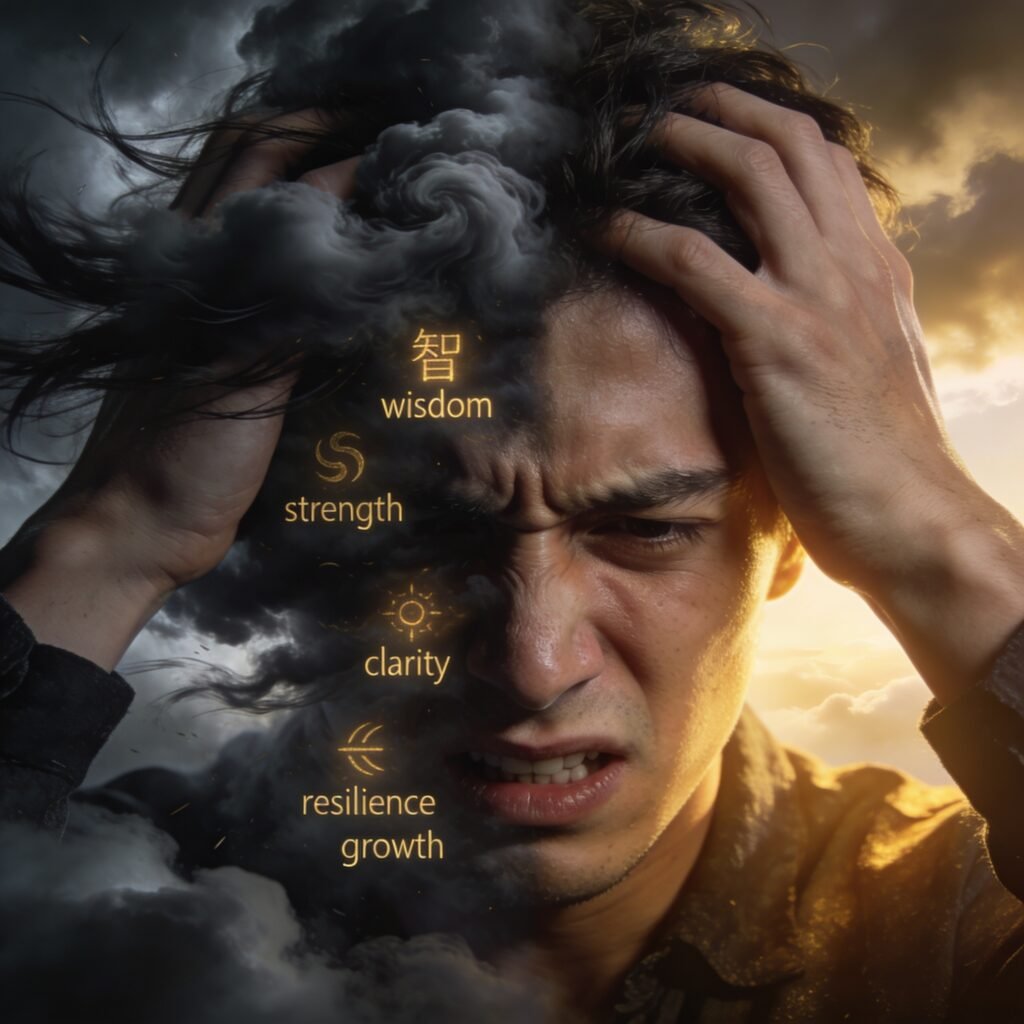
The People Who Bounced Back Stronger — What They All Had in Common
Look closely at the people who have navigated serious setbacks — real ones, not just inconveniences — and emerged not just recovered but genuinely transformed, and you’ll notice a consistent pattern.
They didn’t pretend it was fine. They let it be hard.
They didn’t rush the process. They gave it the time it needed.
They stayed curious about what the experience was teaching them even when the teaching felt brutal.
They found at least one person to go through it with — someone who could hold the weight with them without trying to talk them out of feeling it.
And they made a decision, at some point in the process — not necessarily immediately, sometimes months later — that the setback was going to mean something. That they were going to extract something from it. That they were not going to let the experience simply happen to them and leave empty-handed.
That decision — that one interior choice — is what separates the people who grow from setbacks and the people who are simply scarred by them.
You can make that choice. You can make it today, wherever you are in the process.
A Final Word for Anyone Still in the Middle of It
If you’re reading this from inside the setback — not from the comfortable retrospective distance of having already come through — I want to say something to you directly.
You do not have to have found the upgrade yet. You do not have to feel grateful yet. You do not have to have assembled the narrative of meaning and growth and silver lining.
You’re allowed to still be in the wreckage. You’re allowed to still be angry, or grieving, or disoriented, or scared. The upgrade doesn’t disappear because you can’t see it yet.
It’s there. It is genuinely there — in the clarity you’re being forced into, in the resilience you’re being forced to build, in the truth that’s being forced to the surface about what matters and what doesn’t, about who shows up and who doesn’t, about the direction your life actually wants to take you.
The setback is not the end of your story. It is, in ways you can’t fully see from inside it, one of the most important chapters.
Trust the process. Do the work. Ask the questions. And when you’re ready — when you’ve let it be what it is long enough to see what it was for — take the upgrade.
It was always meant for you.