
Discover the best audiobook subscriptions and devices for busy professionals in 2026 — compare Audible, Everand, Kobo Plus, Spotify, and more, plus the best eReaders and headphones for learning on the go.
If your calendar looks like a losing game of Tetris, sitting down with a physical book probably isn’t happening any time soon. That’s exactly why audiobooks have exploded among busy professionals — you can absorb a leadership book on your commute, finish a business biography on a run, or knock out a novel while doing the dishes. No dedicated reading time required.
This guide breaks down the best audiobook subscriptions for 2026, the best devices to listen on, and the exact strategy busy professionals use to turn dead time into learning time. Whether you’re comparing Audible alternatives, trying to decide between a Kindle and a Kobo, or just want to know which headphones survive an 8-hour workday, you’ll find a clear, practical answer below.
Why Audiobooks Are Perfect for Busy Professionals
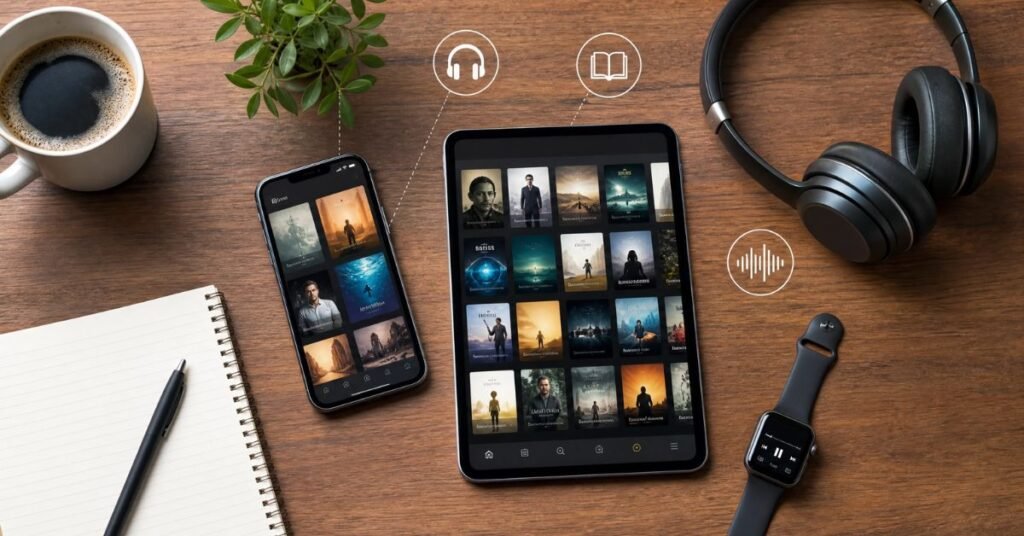
You reclaim hours you’re already spending
The average commuter, gym-goer, or dog-walker has an hour or more of “occupied hands, free ears” time every day. Audiobooks turn that time into professional development instead of dead air.
Multitasking that actually works
Unlike reading, listening doesn’t compete for your eyes or hands. You can listen while:
- Commuting (car, train, or walking)
- Exercising or doing chores
- Cooking or meal prepping
- Doing low-focus admin work
Continuous learning without the willpower tax
Most people don’t finish books because they can’t find a block of quiet time to sit and read. Audiobooks remove that barrier — a chapter fits into a grocery run.
Real productivity gains
Faster playback speeds (1.25x–2x), sleep timers, and bookmarking mean you can consume a typical 8-hour business book in under 5 hours of actual listening time, often within a single work week of commuting.
How to Choose an Audiobook Subscription

Not all audiobook subscriptions work the same way, and the differences matter more than the marketing copy suggests. Before picking one, weigh these factors:
- Monthly pricing — flat fee vs. credit-based vs. hour-capped
- Library size — total catalog size isn’t the same as what’s actually included in your plan
- Offline downloads — essential for commuters with spotty signal
- Exclusive content — some platforms lock popular titles behind their own originals program
- Audio quality — bitrate and narrator quality vary by platform and title
- Device compatibility — does it work on your phone, car system, smartwatch, and eReader?
- Membership perks — discounts, credit rollover, family sharing
- Cancellation policy — do you keep what you’ve listened to, or lose access the moment you cancel?
That last point trips up more people than any other. Some services (like Audible’s Premium Plus plan) let you keep audiobooks forever, even after canceling. Others (like Audible’s cheaper Standard plan, or Everand) only grant access while you’re actively subscribed.
Best Audiobook Subscription Services
Audible
Overview: The market leader, owned by Amazon, with by far the largest catalog and the deepest exclusive-content library. In March 2026, Audible added a cheaper Standard tier to compete more directly with Spotify.
Features:
- Two main plans: Standard and Premium Plus
- Whispersync integration with Kindle for switching between text and audio
- Deep exclusive-content library (Audible Originals)
- Prime member trial bonuses
Pros:
- Largest, deepest catalog of any platform
- Premium Plus lets you keep audiobooks after canceling
- Best-in-class app and playback controls
- Tight Kindle/Whispersync integration
Cons:
- Standard plan doesn’t let you keep books after you cancel
- Premium Plus at 1 credit/month can feel limiting for heavy readers
- Not the cheapest option on the market
Pricing: <cite index=”8-1″>Standard costs $8.99 per month and includes one audiobook a month from Audible’s catalog plus unlimited listening from a curated library</cite>. <cite index=”8-1″>Premium Plus costs $14.95 per month</cite>, and <cite index=”7-1″>a 2-credit Premium Plus plan runs about $22.95/month, or roughly $12.46 per credit if billed annually</cite>. <cite index=”8-1″>Unlike Standard, Premium Plus subscribers keep the audiobooks they’ve listened to even after canceling</cite>.
Best for: Professionals who want the deepest catalog and plan to build a permanent audiobook library.
Supported devices: iOS, Android, Kindle, Alexa devices, CarPlay/Android Auto, web player.
Everand (formerly Scribd)
Overview: Everand shifted away from its old unlimited-access model to a credit-based “unlocks” system, but it bundles audiobooks, ebooks, magazines, and podcasts into one subscription.
Features:
- Three tiers based on monthly “unlocks”
- Unlimited access to a rotating curated catalog (no unlock required)
- Combines audiobooks and ebooks in one app
Pros:
- One subscription covers audiobooks, ebooks, and more
- Curated catalog gives some unlimited listening even on the cheapest tier
- Good for people who switch between reading and listening
Cons:
- No longer offers true unlimited access to the full catalog
- You lose access to unlocked titles when you cancel
- Many longtime users feel the 2024 pricing overhaul reduced value
Pricing: <cite index=”13-1″>Standard costs $11.99/month for 1 unlock, Plus costs $16.99/month for 3 unlocks, and Deluxe costs $28.99/month for 5 unlocks</cite>. <cite index=”17-1″>Both plans also include unlimited access to a select catalog of 20,000+ additional titles, including Everand Originals and podcasts</cite>.
Best for: Readers who want audiobooks and ebooks under one subscription and don’t mind a credit system.
Supported devices: iOS, Android, web, Apple Watch, CarPlay.
Kobo Plus
Overview: Rakuten Kobo’s subscription service pairs naturally with Kobo eReaders but also works through its mobile app, offering separate or combined ebook/audiobook tiers.
Features:
- Kobo Plus Listen (audiobooks only) or Read & Listen (combined) plans
- Unlimited listening within the Kobo Plus catalog (no credit system)
- Integrates directly with Kobo eReaders
Pros:
- Genuinely unlimited listening within its catalog, unlike credit-based rivals
- Deep discount pricing during promotional periods
- Works well for readers who already own a Kobo device
Cons:
- Smaller audiobook catalog than Audible or Everand
- Regional availability is inconsistent
- Best experience is tied to owning Kobo hardware
Pricing: <cite index=”19-1″>Kobo Plus Listen offers unlimited access to roughly 100,000 audiobooks for about $7.99/month, while the combined Read & Listen plan runs about $9.99/month</cite>. Kobo also offers a separate <cite index=”20-1″>Kobo Audiobook Credits plan at $9.99 a month, which provides one credit toward any eligible audiobook in the expanded catalog</cite>.
Best for: Kobo eReader owners and budget-conscious listeners who want unlimited access rather than credits.
Supported devices: Kobo eReaders, iOS, Android, web.
Spotify Audiobooks
Overview: Audiobooks are bundled into Spotify Premium, giving subscribers a set number of listening hours each month rather than unlimited or credit-based access.
Features:
- Included automatically with most Premium plans
- Large catalog integrated into the existing Spotify app
- Optional add-on for extra hours
Pros:
- No new app needed if you already use Spotify
- Convenient for casual listeners who don’t finish many books a month
- Bundled with music and podcasts you’re likely already paying for
Cons:
- Monthly hour cap makes it a poor fit for heavy listeners
- Can’t share audiobook hours with Family/Duo plan members (only the plan manager gets them)
- Playback speed doesn’t stretch your hour allotment — <cite index=”33-1″>a 5-hour audiobook still counts as 5 hours against your allowance even if you finish it faster at 2x speed</cite>
Pricing: <cite index=”27-1″>Premium subscribers get 15 hours of audiobook listening per month included at no extra cost, from a catalog of over 400,000 titles</cite>. <cite index=”27-1″>Once you hit that cap, you can buy a 10-hour top-up for around $12.99, or add the Audiobooks+ add-on for roughly $11.99/month for extra hours</cite>.
Best for: Casual or moderate listeners who already pay for Spotify Premium and don’t want another subscription.
Supported devices: iOS, Android, desktop, smart speakers, car integrations.
Apple Books
Overview: Apple’s native audiobook and ebook store, best suited to listeners fully inside the Apple ecosystem. It’s primarily a pay-per-book model rather than a subscription.
Pros: Deep iOS/CarPlay/Apple Watch integration, no separate app needed, easy purchases via Apple ID. Cons: No true unlimited subscription tier, prices are generally full retail. Best for: iPhone-first professionals who want simplicity over savings. Supported devices: iPhone, iPad, Mac, Apple Watch, CarPlay, HomePod.
Google Play Books

Overview: Android’s equivalent to Apple Books — a pay-per-title store rather than a subscription library.
Pros: Simple purchases, works across Android and web, no separate app for Android users. Cons: No subscription tier, pricing isn’t typically discounted. Best for: Android users who want a no-frills, pay-as-you-go option. Supported devices: Android, web, Chromebooks.
Audiobooks.com
Overview: A veteran, credit-based subscription service similar in structure to Audible.
Pricing: <cite index=”36-1″>Roughly $14.95 per month, with VIP access to more than 10,000 free audiobooks</cite>, though <cite index=”36-1″>credits expire after just three months, which is shorter than most competitors allow</cite>. Pros: Large catalog, frequent free-title promotions. Cons: Short credit expiration window; mixed customer service reputation. Best for: Listeners who reliably use their credit every month.
Libro.fm
Overview: A credit-based subscription built specifically to support independent bookstores — every purchase sends a portion of proceeds to a local shop you choose.
Features: DRM-free downloads you actually own, monthly credit system, discount codes on select titles. Pros: <cite index=”41-1″>Its Annual Plus plan matches Audible Premium Plus on a per-credit basis while handing you a DRM-free file you keep forever and supporting an independent bookstore of your choice</cite>. Cons: Smaller catalog than Audible; <cite index=”44-1″>no chapter titles in the app — chapters just show as “Track 1, Track 2,” and there are no customer reviews</cite>. Best for: Professionals who want to support local bookstores without giving up Audible-level pricing.
Chirp
Overview: A no-subscription, deal-driven audiobook marketplace from the team behind BookBub.
Pricing: <cite index=”40-1″>Prices typically range from $1.99 to $6.99, with occasional titles going for as little as $0.99</cite> — <cite index=”36-1″>you buy audiobooks at steep discounts, often $3 to $6 instead of $20+, and own them outright with no monthly fee</cite>. Pros: No recurring commitment, genuinely low prices, titles are yours to keep. Cons: No subscription convenience or curated recommendations; you’re deal-hunting rather than browsing a full catalog. Best for: Budget-conscious listeners who don’t mind waiting for titles to go on sale.
Speechify
Overview: Not a traditional audiobook store — Speechify is an AI text-to-speech tool that converts articles, PDFs, ebooks, and documents into spoken audio.
Pros: Turns non-audiobook content (reports, research papers, work documents) into listening material, which is uniquely useful for professionals. Cons: AI narration doesn’t match the performance quality of professionally narrated audiobooks. Best for: Professionals who want to “listen” to work documents and articles, not just published books.
Comparison Table
| Service | Monthly Price | Free Trial | Offline Listening | Library Size | Exclusive Titles | Family Sharing | Device Compatibility |
| Audible Standard | $8.99 | Yes | Yes | 1M+ titles | Yes (limited) | No | iOS, Android, Kindle, web |
| Audible Premium Plus | $14.95–$22.95 | Yes | Yes | 1M+ titles | Yes | Yes (Amazon Household) | iOS, Android, Kindle, web |
| Everand | $11.99–$28.99 | Yes | Yes | 1.5M+ titles | Yes | No | iOS, Android, web |
| Kobo Plus | $7.99–$9.99 | Yes | Yes | ~100K–150K audiobooks | Limited | No | Kobo eReaders, iOS, Android |
| Spotify Premium | Included / +$11.99 add-on | Yes | Yes | 400K+ titles | Limited | Manager-only hours | iOS, Android, desktop, smart speakers |
| Libro.fm | ~$14.99+ | Yes | Yes | 99% of NYT bestsellers | Limited | No | iOS, Android, web |
| Chirp | Pay-per-book | N/A | Yes | Deal-based catalog | No | No | iOS, Android, Kindle-compatible files |
| Audiobooks.com | ~$14.95 | Yes | Yes | Large | Limited | No | iOS, Android, web |
Pricing and plan details verified mid-2026; check each provider’s site for current promotions.
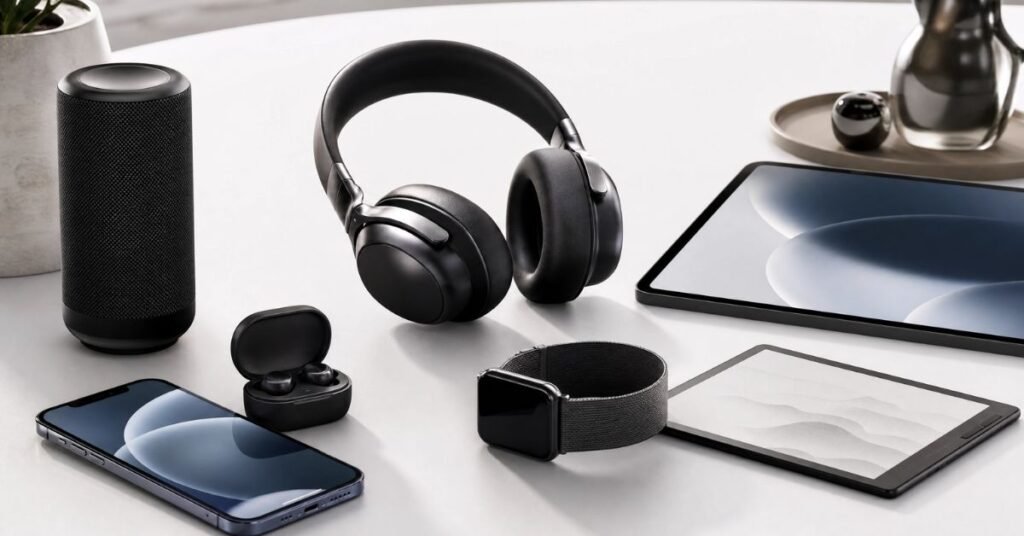
Best Devices for Listening to Audiobooks
Kindle
Amazon’s eReader lineup is the natural home for Audible listeners thanks to Whispersync, which syncs your position between the ebook and audiobook versions of the same title. <cite index=”46-1″>If your audiobook library is in Audible, Kindle is the only eReader path that keeps that integration intact</cite>. <cite index=”45-1″>The Kindle Paperwhite starts at $159.99, is waterproof, and offers roughly 12 weeks of battery life</cite>.
- Best use case: Audible loyalists who also want an eReader for text-based reading.
- Battery life: Weeks, not hours, for reading; audiobook playback drains it faster if playing directly on-device.
Kobo eReaders
Kobo devices are the better pick if you borrow from public libraries or want broader file-format support. <cite index=”46-1″>Kobo wins on file formats since it natively supports EPUB, on library borrowing because OverDrive/Libby is integrated at the OS level, and on stylus reading, while Kindle wins on its store, Audible audiobooks, and entry-level price</cite>. <cite index=”45-1″>The Kobo Libra Colour runs about $229.99</cite> and pairs naturally with Kobo Plus.
- Best use case: Library-card users and Kobo Plus subscribers.
- Battery life: Comparable to Kindle, several weeks under normal reading use.
iPhone / Android Phones
For most professionals, the phone already in their pocket is the primary audiobook device — no extra hardware required, and every subscription service listed above has a mobile app.
- Best use case: Commuters and anyone who wants one device for everything.
- Battery life: Hours, not weeks; audiobook streaming is a real battery drain on long commutes.
iPad / Tablets
A good secondary device for evening listening at home, especially if you also use the same app for ebooks.
- Best use case: At-home listening paired with a smart speaker or headphones.
Smart Speakers
Alexa and Google Home devices support Audible and Spotify playback hands-free — useful for listening while cooking or getting ready in the morning.
- Best use case: Hands-free listening at home.
Apple Watch / Wear OS Devices
Useful for controlling playback and skipping chapters without pulling out your phone during a workout or run.
- Best use case: Gym and running sessions.
- Battery life: A full day of mixed use; dedicated audio streaming from the watch itself will drain it faster.
Bluetooth Headphones and Noise-Canceling Earbuds
The single most important audiobook accessory for most professionals — comfort and battery life matter more than audio fidelity for spoken word.
Best Headphones and Earbuds
Audiobooks don’t need audiophile-grade frequency response, but comfort, noise cancellation, and battery life matter enormously for multi-hour listening sessions.
- Sony WH-1000XM6 — <cite index=”52-1″>A worthy successor in Sony’s ANC lineup, with excellent noise cancellation built to handle demanding daily use</cite>. A strong all-around pick for commuters.
- Bose QuietComfort Ultra — <cite index=”51-1″>Known for plush comfort and easygoing tuning</cite>, making it a favorite for multi-hour listening sessions.
- Apple AirPods Max 2 / AirPods Pro 3 — <cite index=”51-1″>Prioritizes seamless pairing and smart integration with Apple devices over raw spec flexibility</cite>, and remains the top choice for anyone deep in the Apple ecosystem.
- Samsung Galaxy Buds — The natural counterpart for Android and Samsung phone users who want tight ecosystem integration.
- Jabra Elite series — Popular with professionals for call quality and comfortable long-wear fit.
- Anker Soundcore — A budget-friendly pick that still delivers solid ANC and battery life for daily commuting.
- Sennheiser MOMENTUM earbuds — <cite index=”54-1″>Offer adaptive noise canceling for an immersive experience, are splash resistant, and provide about 7 hours of battery life in the earbuds with an additional 21 hours from the charging case</cite>.
- Shokz OpenRun Pro (bone conduction) — <cite index=”54-1″>Transmits audio by vibrating the area around your skull rather than covering your ears, letting you hear the outside world undisturbed</cite> — ideal for outdoor runners and cyclists who need situational awareness.
Audible vs Everand vs Kobo Plus
These three represent the three dominant subscription philosophies in audiobooks today: credit-based ownership (Audible), credit-based bundling (Everand), and unlimited access (Kobo Plus).
- Content: Audible has the deepest catalog and most exclusives; Everand bundles ebooks and audiobooks together; Kobo Plus has the smallest catalog but is genuinely unlimited within it.
- Price: Kobo Plus is the cheapest entry point; Audible Standard sits in the middle; Everand and Audible Premium Plus scale up with usage.
- Value: <cite index=”41-1″>Audible remains the benchmark, scoring highest across catalog and ownership, with Everand rated more conditional value due to its credit-bundle model</cite>.
- Ease of use: Audible’s app and playback controls are consistently rated the most polished.
- Offline listening: All three support offline downloads.
- Exclusive books: Audible’s Originals program is the deepest; Everand and Kobo Plus have smaller exclusive libraries.
- Best user type: Audible for serious, ongoing listeners who want to build a library; Everand for readers who want both ebooks and audiobooks; Kobo Plus for budget-conscious, moderate listeners who don’t need Audible’s exclusives.
Tips for Listening More Efficiently
- Use speed controls. Most professionals settle into 1.25x–1.5x for nonfiction and business books, saving noticeable time without losing comprehension.
- Set sleep timers. Prevents you from losing your place — or falling asleep mid-chapter and missing key content.
- Bookmark key passages. Useful for business and self-development titles you’ll want to revisit or quote later.
- Build a daily listening habit. Attach listening to an existing routine — your commute, your workout, or your morning coffee — so it doesn’t require extra willpower.
- Optimize your commute. If you drive, use CarPlay or Android Auto integration so playback starts automatically when you connect.
- Batch similar content. Alternate between a “focus” nonfiction title and a lighter fiction pick so you don’t burn out on dense material.
Frequently Asked Questions
Which audiobook subscription is best? For most professionals who listen regularly and want the deepest catalog, Audible is the strongest overall choice. If you want unlimited access on a budget, Kobo Plus is worth a look. If you already read ebooks and want both formats bundled, Everand is a solid pick.
Is Audible worth the money? <cite index=”7-1″>Audible’s Premium Plus plan at roughly $14.95/month, or about $12.46 per credit when billed annually, is competitive with most alternatives</cite>, and the ability to keep audiobooks after canceling adds long-term value that credit-only or hour-capped services don’t offer.
Are free audiobook apps good? Library-based apps that connect to your public library card can provide a genuinely free catalog, though selection and wait times vary by library system. They’re a smart complement to a paid subscription rather than a full replacement for busy professionals who need immediate access.
Can I listen offline? Yes — Audible, Everand, Kobo Plus, Spotify, Libro.fm, and Audiobooks.com all support offline downloads for commuting without a signal.
Which devices work best? Your phone plus a comfortable pair of Bluetooth headphones covers 90% of use cases. Add a Kindle or Kobo eReader if you also read ebooks, and a smartwatch if you want hands-free control during workouts.
What speed should I use? Most listeners find 1.25x–1.5x comfortable for nonfiction and business titles, while fiction listeners often prefer 1x–1.25x to preserve narration pacing and tone.
Can I share subscriptions? Audible supports family sharing through Amazon Household. <cite index=”33-1″>Spotify’s audiobook hours are tied to the plan manager on Duo or Family plans, though the manager can purchase extra listening hours for other members</cite>. Everand and Kobo Plus generally don’t support family sharing.
Final Verdict
- Budget users: Kobo Plus or Chirp — unlimited access or steep one-off discounts without a premium price tag.
- Professionals: Audible Premium Plus — deepest catalog, strongest app, and you keep what you listen to.
- Students: Spotify Premium (if already subscribed) or Audible’s student/Prime trial offers.
- Families: Audible Premium Plus with Amazon Household sharing.
- Heavy listeners: Audible 2-credit Premium Plus or Kobo Plus Listen for genuinely unlimited access.
- Apple users: Audible paired with AirPods Pro 3 or AirPods Max 2 for the tightest ecosystem integration.
- Android users: Everand or Kobo Plus paired with Galaxy Buds or Sony earbuds.
Audiobooks work because they remove the biggest barrier to learning: finding time. Pick the subscription that matches how much you actually listen, invest in a pair of headphones comfortable enough for multi-hour sessions, and treat your commute or workout as non-negotiable learning time. That’s the whole system — no willpower required, just a good pair of headphones and a queue full of books worth finishing.