
Discover the best meditation apps for stress, anxiety, and sleep in 2026. Compare Headspace, Calm, Insight Timer, and more with expert reviews and tips.
Your phone buzzes for the tenth time before 9 a.m. Your inbox is full. Your to-do list feels longer than your day. If this sounds familiar, you’re not alone.
Stress and anxiety are climbing every year, and a lot of it comes from the always-on, always-connected life most of us live now. Add poor sleep and a shrinking attention span into the mix, and it’s no wonder so many people feel burned out before lunch.
That’s where meditation comes in. Meditation is one of the most researched, evidence-backed tools for lowering stress, improving focus, and helping you sleep better. But sitting down to meditate on your own can feel intimidating, especially if you’ve never tried it before.
This is exactly why best meditation apps have become so popular. They turn a practice that once required a teacher, a cushion, and a quiet room into something you can do anywhere, in just a few minutes, with a guided voice walking you through every step.
In this guide, we’ll walk through the best meditation apps and mindfulness tools available right now. You’ll learn how they work, what makes them different, which ones are worth paying for, and how to build a meditation habit that actually sticks — even if you’ve never meditated a day in your life.
Whether you’re a stressed-out professional, a student cramming for exams, a new parent running on four hours of sleep, or someone who just wants a calmer mind, there’s an app on this list for you.
What Are Meditation Apps?
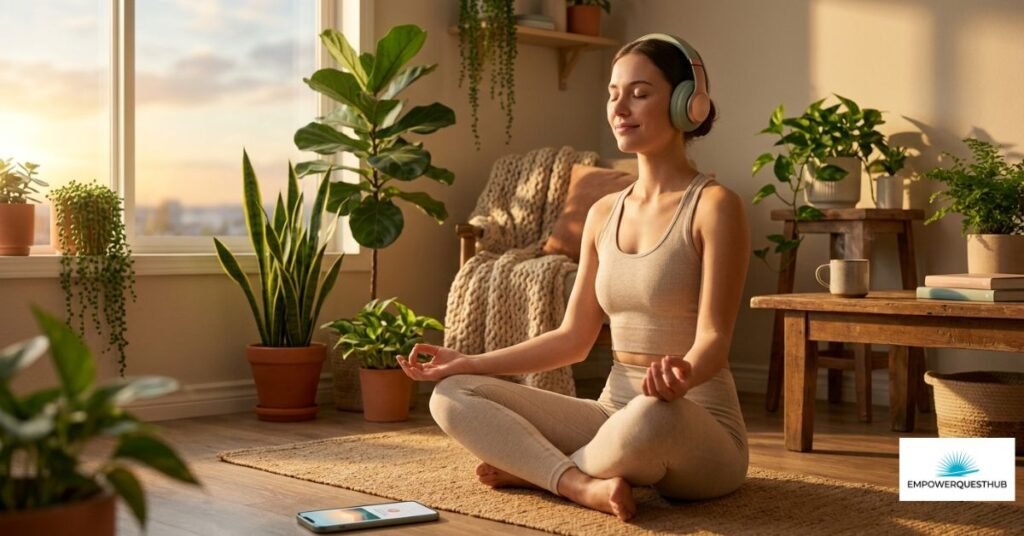
Meditation apps are mobile and desktop tools designed to guide you through mindfulness and relaxation practices using audio, video, and interactive features. Think of them as a personal meditation teacher that lives in your pocket.
Most meditation apps include a mix of the following:
- Guided meditation — A narrator talks you through breathing, body awareness, or visualization exercises, step by step.
- Mindfulness exercises — Short practices that train you to notice your thoughts and feelings without judgment.
- Breathing sessions — Structured breathwork patterns (like box breathing or 4-7-8 breathing) to calm your nervous system quickly.
- Relaxation music and soundscapes — Ambient audio like rain, ocean waves, or soft instrumental tracks for background calm or focus.
- Sleep stories — Slow, soothing narrated stories designed to help your mind unwind and drift off.
- Focus timers — Simple timers (often with interval bells) for unguided or silent meditation sessions.
- Daily reminders — Push notifications that nudge you to practice at a set time each day.
- Progress tracking — Streaks, session counts, and stats that show how consistent you’ve been.
The goal of every meditation app is the same: make mindfulness accessible, approachable, and easy to fit into a busy life — no prior experience needed.
Benefits of Meditation Apps

Meditation isn’t just a wellness trend. A growing body of research supports its impact on both mental and physical health. Here’s what a consistent practice, supported by an app, can actually do for you.
Guided meditation and breathwork activate your parasympathetic nervous system, the part of your body responsible for the “rest and digest” response. This helps lower cortisol, your primary stress hormone.
Sleep stories, body scans, and calming soundscapes can help quiet a racing mind, making it easier to fall — and stay — asleep. Regular mindfulness practice has been linked to reduced symptoms of generalized anxiety, helping you respond to anxious thoughts instead of getting swept up in them.
Improved concentration. Meditation trains your brain to notice when your attention has wandered and gently bring it back. Over time, this “attention muscle” gets stronger, which can improve focus at work or school.
Emotional regulation. Mindfulness helps create a small pause between a feeling and your reaction to it, so you’re less likely to snap, spiral, or shut down under pressure.
Increased productivity. A calmer, more focused mind makes it easier to prioritize tasks, avoid distractions, and get into deep work.
Reduced burnout. Short daily resets can prevent the kind of chronic overwhelm that leads to burnout, especially for remote workers juggling blurred work-life boundaries.
Better mood. Many users report feeling more even-keeled and less reactive after just a few weeks of consistent practice.
Sustainable mindfulness habits. Apps make it easy to build a habit through reminders, streaks, and short sessions — removing the guesswork of “how” and “when” to meditate.
Comparison Table: Best Meditation Apps at a Glance
| App | Best For | Free Version | Price (Annual) | Platforms | Offline Mode | Sleep Content | Guided Meditation | AI Features | Rating |
| Headspace | Beginners & structured courses | Limited | ~$69.99/yr (~$12.99/mo) | iOS, Android, Web | Yes | Yes (Sleepcasts) | Yes | Limited | 4.5/5 |
| Calm | Sleep & relaxation | Limited | ~$69.99–$79.99/yr (~$14.99–$16.99/mo) | iOS, Android, Web | Yes | Yes (Sleep Stories) | Yes | Limited | 4.5/5 |
| Insight Timer | Free content & variety | Extensive | ~$59.99/yr (Member+) | iOS, Android, Web | Yes (paid) | Yes | Yes (largest free library) | Growing | 4.7/5 |
| Balance | Personalized plans | Yes (first year free) | ~$69.99/yr after trial | iOS, Android | Yes | Yes | Yes | Yes (adaptive plans) | 4.6/5 |
| Medito | 100% free meditation | Fully free | Free (donation-based) | iOS, Android | Yes | Limited | Yes | No | 4.4/5 |
| Healthy Minds Program | Science-based, free | Fully free | Free | iOS, Android | Yes | Limited | Yes | No | 4.6/5 |
| Smiling Mind | Kids, teens & families | Fully free | Free | iOS, Android, Web | Yes | Limited | Yes | No | 4.3/5 |
| Ten Percent Happier | Skeptics & beginners | Limited | ~$99.99/yr (~$14.99/mo) | iOS, Android | Yes | Yes | Yes | No | 4.6/5 |
| Breethe | AI-personalized sessions | Limited | ~$89/yr (lifetime ~$179.99) | iOS, Android | Yes | Yes | Yes | Yes (Made4You) | 4.4/5 |
| Aura | Mood-based recommendations | Limited | ~$59.99–$69.99/yr | iOS, Android | Yes | Yes | Yes | Yes (mood matching) | 4.5/5 |
Pricing reflects publicly listed rates as of 2026 and may vary by region, promotion, or app store. Always check the app’s official pricing page before subscribing.
The 10 Best Meditation Apps, Reviewed
1. Headspace — Best for Beginners
Overview: Headspace is one of the most recognizable names in the meditation app space, known for its friendly animation, clear structure, and beginner-friendly courses.
Key features:
- Structured, multi-day courses on stress, anxiety, sleep, and focus
- Sleepcasts and wind-down content for better rest
- Guided breathing exercises and mini-meditations
- Mindful movement and workout content
- Optional Headspace Care add-on for therapy and coaching
Pros:
- Excellent for total beginners
- Clean, calming design that’s easy to navigate
- Strong course structure that builds skills progressively
Cons:
- Free content is limited
- Can feel expensive compared to Insight Timer
- Some advanced meditators may find it too basic
Pricing: Around $69.99 per year or roughly $12.99 per month, with discounted student and family plans available.
Best for: Complete beginners who want a guided, structured path into meditation.
Platforms: iOS, Android, Web.
Expert opinion: Headspace remains a strong first stop for anyone new to mindfulness because it removes the guesswork. The courses build on each other, so you’re never left wondering what to do next.
2. Calm — Best for Sleep and Relaxation
Overview: Calm is best known for its Sleep Stories, narrated by well-known voices, along with a large library of relaxing soundscapes and music.
Key features:
- Sleep Stories narrated by celebrities and public figures
- Daily Calm sessions
- Breathing exercises with the Breathe Bubble tool
- Kids’ content (Calm Kids)
- Masterclasses on topics like focus and gratitude
Pros:
- Best-in-class sleep content
- Visually polished and immersive
- Good variety for relaxation, not just meditation
Cons:
- Minimal free content
- Higher monthly price than some competitors
- Less structured for skill-building than Headspace
Pricing: Roughly $69.99–$79.99 per year, or about $14.99–$16.99 per month. A lifetime plan and family plan are also available.
Best for: People whose main goal is better sleep and relaxation.
Platforms: iOS, Android, Web.
Expert opinion: If sleep is your primary concern, Calm’s Sleep Stories are hard to beat. It’s less about building a formal meditation practice and more about creating moments of calm throughout your day.
3. Insight Timer — Best Free Meditation App
Overview: Insight Timer has the largest free library of any meditation app, with hundreds of thousands of guided sessions from teachers, psychologists, and mindfulness experts around the world.
Key features:
- Enormous free content library
- Live guided sessions and community groups
- Customizable meditation timer with ambient sounds
- Sleep content, music, and courses
- Member+ premium tier for offline access and courses
Pros:
- Unmatched free content
- Huge variety of teaching styles and traditions
- Active, supportive community features
Cons:
- Can feel overwhelming due to sheer volume of content
- Interface is less streamlined than Headspace or Calm
- Some premium features locked behind Member+
Pricing: Free with an optional Member+ subscription around $59.99 per year.
Best for: Budget-conscious users who still want high-quality guided content.
Platforms: iOS, Android, Web.
Expert opinion: For anyone who wants to try meditation without paying a cent, Insight Timer is the clear winner. The sheer breadth of teachers means you can find a voice and style that actually resonates with you.
4. Balance — Best for Personalized Plans
Overview: Balance builds a meditation plan around your goals, experience level, and daily check-ins, adjusting recommendations as you go.
Key features:
- Personalized 10-day starter plan
- Daily check-ins that adapt future sessions
- Multiple teacher voices to choose from
- Apple Health integration
Pros:
- Feels tailored rather than one-size-fits-all
- Generous free trial period
- Encourages consistency through daily personalization
Cons:
- Price increases significantly after the free trial
- Smaller content library than Calm or Insight Timer
Pricing: Free for an extended trial period, then roughly $69.99 per year.
Best for: Users who want an app that adapts to their mood and progress.
Platforms: iOS, Android.
Expert opinion: Balance’s adaptive approach makes it feel less like a static library and more like a coach that’s paying attention to how you’re doing.
5. Medito — Best Completely Free App
Overview: Medito is a nonprofit, donation-supported app built specifically to be free of ads, subscriptions, and paywalls.
Key features:
- Fully free guided courses for beginners through advanced practitioners
- Offline downloads at no cost
- Sleep and focus content
- No account or subscription required
Pros:
- Genuinely free, no hidden premium tier
- Ad-free and distraction-free
- Great starter courses for new meditators
Cons:
- Smaller content library than commercial apps
- Fewer regular content updates
Pricing: Free (optional donations).
Best for: Anyone who wants a no-cost, no-catch meditation app.
Platforms: iOS, Android.
Expert opinion: Medito proves you don’t need a subscription to build a solid meditation habit. It’s an excellent choice for students and anyone on a tight budget.
6. Healthy Minds Program — Best Science-Backed Free App
Overview: Developed by neuroscientist Dr. Richard Davidson’s Center for Healthy Minds, this app is grounded in peer-reviewed research on well-being.
Key features:
- Structured curriculum based on four pillars: Awareness, Connection, Insight, and Purpose
- Research-based approach to lasting well-being
- Completely free, with no ads
Pros:
- Backed by academic research
- Thoughtful, progressive curriculum
- No cost barrier at all
Cons:
- Less flashy design than commercial competitors
- Smaller music and sleep library
Pricing: Free.
Best for: Users who want a scientifically grounded approach without the marketing gloss.
Platforms: iOS, Android.
Expert opinion: For readers who care about the “why” behind meditation, this app’s research-driven structure is a standout.
7. Smiling Mind — Best for Kids, Teens, and Families
Overview: Smiling Mind is a nonprofit app built specifically for young people, with age-tailored programs for kids, teens, and adults.
Key features:
- Programs organized by age group
- Classroom and workplace mindfulness content
- Simple, distraction-free design
Pros:
- Fully free
- Age-appropriate content for children and teens
- Backed by an Australian nonprofit focused on youth mental health
Cons:
- Smaller adult-focused library
- Less variety in sleep content
Pricing: Free.
Best for: Families, teachers, and anyone introducing mindfulness to kids.
Platforms: iOS, Android, Web.
8. Ten Percent Happier — Best for Skeptics
Overview: Created by former news anchor Dan Harris, this app takes a secular, no-hype approach to meditation aimed at people who are skeptical of “woo-woo” wellness culture.
Key features:
- Courses taught by respected, credentialed meditation teachers
- Practical, science-first framing
- Podcast-style content and interviews
Pros:
- Down-to-earth tone that appeals to skeptics
- High-quality teacher roster
- Strong focus on real-world application
Cons:
- One of the pricier subscriptions on this list
- Limited free content
Pricing: Around $99.99 per year, or roughly $14.99 per month.
Best for: Skeptical beginners who want an evidence-based, jargon-free introduction.
Platforms: iOS, Android.
9. Breethe — Best for AI-Personalized Sessions
Overview: Breethe uses its “Made4You” AI feature to generate custom meditations based on how you’re feeling in the moment.
Key features:
- AI-generated custom meditations
- Hypnotherapy sessions
- Large sleep story library
Pros:
- Genuinely personalized, mood-based content
- Useful for targeted concerns like weight, confidence, or focus
Cons:
- AI features can feel hit-or-miss
- Fewer traditional structured courses
Pricing: Around $89 per year, with a lifetime option around $179.99.
Best for: Users who want content tailored to their exact mood each day.
Platforms: iOS, Android.
10. Aura — Best for Mood-Based Recommendations
Overview: Aura combines meditation, coaching, and mood tracking, using daily check-ins to recommend content suited to how you’re feeling.
Key features:
- Daily mood check-ins
- Personalized recommendations across meditation, sleep, and coaching
- One-on-one coaching add-on
Pros:
- Strong personalization based on real-time mood data
- Wide variety of content types in one app
- Good option for anxiety-specific support
Cons:
- Free tier is very limited
- Coaching add-on costs extra
Pricing: Roughly $59.99–$69.99 per year, with a lifetime option around $399.99.
Best for: Users who want their app to respond to how they’re actually feeling each day.
Platforms: iOS, Android.
Free vs. Paid Meditation Apps: Which Should You Choose?

Benefits of free apps:
- Zero financial risk, ideal for testing whether meditation is right for you
- Apps like Insight Timer, Medito, Healthy Minds Program, and Smiling Mind offer genuinely robust free libraries
- Great for building an initial habit before committing to a subscription
Limitations of free apps:
- Smaller or restricted content libraries
- Fewer advanced courses or structured programs
- Limited or no offline downloads in some cases
- Occasional ads (in a small number of apps)
What premium subscriptions typically unlock:
- Full access to sleep stories, courses, and specialty content
- Offline downloads for travel or low-connectivity areas
- Progress tracking and personalized recommendations
- Access to live sessions, coaching, or AI-personalized content
Who should pay for a premium plan:
- Anyone who meditates most days and wants deeper content variety
- People specifically seeking structured programs for anxiety, sleep, or focus
- Users who want offline access for commuting or travel
Best free choices: Insight Timer (best overall free library), Medito (best fully free experience), Healthy Minds Program (best science-based free app), and Smiling Mind (best free app for families).
If you’re not sure meditation is for you yet, start free. If you already know you want a daily practice with more structure, a paid plan is usually worth the investment.
Best Meditation Apps by Goal

- Anxiety: Ten Percent Happier and Aura both offer targeted content for anxious thoughts and racing minds.
- Stress: Headspace’s stress courses and Calm’s Daily Calm sessions are both strong, approachable options.
- Sleep: Calm’s Sleep Stories are the gold standard, with Headspace’s Sleepcasts as a close second.
- Focus: Insight Timer’s customizable timer and Headspace’s focus music are great for deep work sessions.
- Beginners: Headspace and Medito both offer clear, low-pressure starting points.
- Students: Medito and Insight Timer are budget-friendly, and Headspace and Calm both offer discounted student plans.
- Professionals: Ten Percent Happier’s practical, no-fluff approach fits busy schedules well.
- Kids: Smiling Mind and Calm Kids are both designed specifically for younger users.
- Seniors: Insight Timer’s variety of gentle, slower-paced sessions works well for older adults new to meditation.
Mindfulness Tools Beyond Apps

Apps are a great starting point, but physical tools can reinforce your practice and make mindfulness part of your environment, not just your phone screen.
- Breathing timers — Simple standalone devices or app widgets that guide paced breathing without any screen distraction.
- Smart breathing devices — Wearable or handheld tools that use haptic feedback to guide your breath in real time.
- Meditation cushions — A supportive cushion (zafu) makes seated practice more comfortable, especially for longer sessions.
- White noise machines — Useful for blocking distractions during meditation or sleep.
- Journals and gratitude journals — Writing down thoughts or things you’re grateful for pairs well with meditation to reinforce emotional awareness.
- Yoga mats — Helpful for combining movement-based mindfulness, like yoga or stretching, with seated meditation.
- Aromatherapy diffusers — Calming scents like lavender can help signal to your brain that it’s time to relax.
- Noise-canceling headphones — Especially useful for remote workers or commuters who need to block out noise for guided sessions.
- Wearable mindfulness devices — Smart rings and watches that track heart rate variability and remind you to take mindful breaks throughout the day.
A Simple Daily Meditation Routine
You don’t need an hour a day to benefit from meditation. Here’s a simple routine you can adapt to your schedule:
Morning (5–10 minutes): Start with a short guided meditation to set your intention for the day. This helps you begin calm instead of reactive.
Afternoon (3–5 minutes): Use a quick breathing exercise or focus session to reset your energy and avoid the early-afternoon slump.
Work breaks (2–5 minutes): Try a mindful breathing break between meetings or tasks to lower stress before it builds up.
Evening (5–10 minutes): Reflect on your day with a short mindfulness or gratitude practice to transition out of “work mode.”
Before bed (10–20 minutes): Wind down with a sleep story or body scan meditation to help your mind and body prepare for rest.
Habit-building tips:
- Pair meditation with an existing habit, like your morning coffee or brushing your teeth
- Set a consistent time and use app reminders
- Start smaller than you think you need to — even 3 minutes counts
- Track your streak, but don’t panic if you miss a day
Common Meditation Mistakes to Avoid
- Expecting instant results. Meditation is a skill. Benefits build gradually, not overnight.
- Meditating inconsistently. A few minutes daily beats an hour once a week.
- Choosing sessions that are too long. Starting with 30-minute sessions can lead to frustration and burnout. Start short.
- Giving up early. Most people need a few weeks of practice before it starts to feel natural.
- Multitasking during meditation. Trying to meditate while scrolling or half-listening defeats the purpose.
- Comparing your progress to others. Everyone’s mind wanders. That’s normal, not a failure.
Expert Tips for Building a Meditation Habit
- Start with just 5 minutes. Short, consistent sessions build habits faster than long, sporadic ones.
- Prioritize consistency over duration. Meditating for 3 minutes every day beats 30 minutes once a week.
- Use reminders strategically. Set a notification for a time you’re likely to actually be free.
- Track your progress. Seeing a streak can be a strong motivator to keep going.
- Pair meditation with an existing habit. Attach it to something you already do daily, like your morning coffee.
- Focus on your breath, not perfection. A wandering mind isn’t a failed session. Noticing it and returning to your breath is the practice.
Frequently Asked Questions
Which meditation app is best for beginners?
Headspace is widely considered the best app for beginners because of its structured, easy-to-follow courses. Medito is a strong free alternative for those who want a beginner path without a subscription.
Are free meditation apps effective?
Yes. Apps like Insight Timer, Medito, and Healthy Minds Program offer research-informed, high-quality guided meditations at no cost. Effectiveness depends more on consistency than on price.
Can meditation reduce anxiety?
Research supports meditation as a helpful tool for reducing anxiety symptoms, particularly through mindfulness-based practices that teach you to observe anxious thoughts without becoming overwhelmed by them. It’s not a replacement for professional treatment when anxiety is severe.
Which app helps improve sleep?
Calm is best known for its Sleep Stories, while Headspace’s Sleepcasts are a close alternative. Both are designed specifically to help quiet a busy mind before bed.
How long should beginners meditate?
Start with 3 to 5 minutes a day. As the habit becomes more natural, you can gradually increase to 10 or 15 minutes.
Is Headspace better than Calm?
It depends on your goal. Headspace is better for structured, course-based learning, while Calm is stronger for sleep and relaxation content. Many users choose based on which style fits their daily routine.
What is the best free meditation app?
Insight Timer is generally considered the best free meditation app due to its enormous library of free guided sessions from teachers around the world.
Are meditation apps worth paying for?
If you meditate regularly and want deeper content, offline access, and structured programs, a paid subscription is usually worth it. If you’re just starting out, free apps can be more than enough.
Can meditation improve productivity?
Yes. By training focus and reducing stress-related distraction, regular meditation can help you concentrate better and manage your workload with less mental fatigue.
Which app has the largest meditation library?
Insight Timer has the largest content library of any meditation app, with hundreds of thousands of free guided sessions.
Conclusion
Stress, anxiety, and poor sleep aren’t going away on their own, but you don’t need hours of free time or a perfect quiet room to start feeling calmer. The best meditation apps make mindfulness accessible in just a few minutes a day, whether you’re brand new to meditation or looking to deepen an existing practice.
Key takeaways:
- Choose an app based on your main goal: structure (Headspace), sleep (Calm), free variety (Insight Timer), or personalization (Balance, Aura)
- Free apps like Insight Timer and Medito are genuinely effective starting points
- Consistency matters more than session length — even 5 minutes a day makes a difference
- Pair your practice with simple daily habits to make it stick
You don’t need to meditate perfectly. You just need to start. Pick one app from this list, commit to just five minutes today, and give yourself permission to build the habit slowly.
Ready to feel calmer? Download a meditation app today, try one guided session, and notice how you feel afterward. Then come back tomorrow and do it again. That’s really all it takes to begin.
Disclaimer: This article is for informational purposes only and is not a substitute for professional medical or mental health advice. If you’re experiencing severe anxiety, depression, or another mental health condition, please consult a licensed healthcare provider. Pricing for apps mentioned reflects publicly available rates as of 2026 and may change; always verify current pricing on the app’s official website before subscribing.