
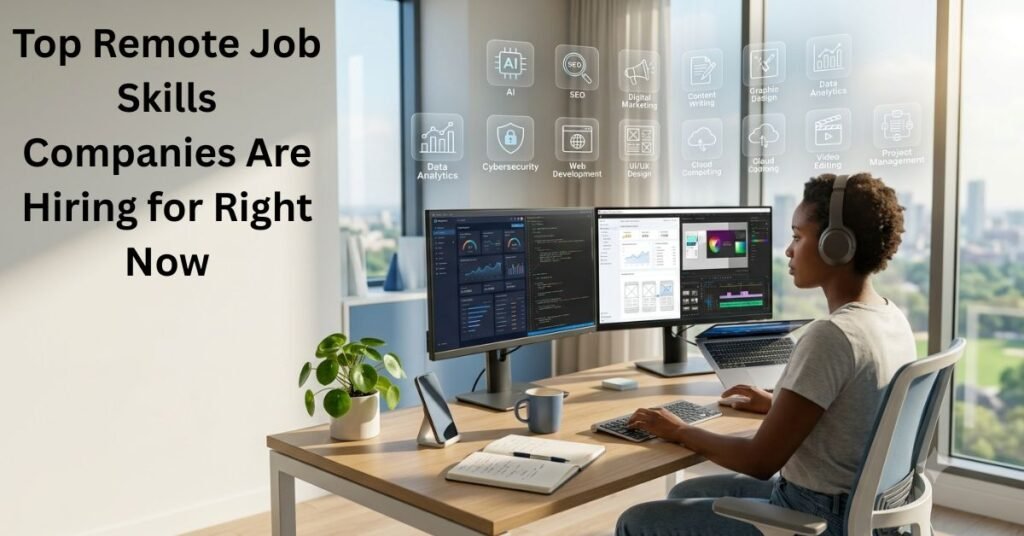
Discover the top remote job skills companies are hiring for right now. Learn high-income, in-demand skills, where to study them, and land a remote job faster.
Remote work didn’t disappear when offices reopened — it evolved. Companies that once hired only within commuting distance now recruit from anywhere in the world, and they’re not primarily screening for degrees anymore. They’re screening for skills. AI tools have reshaped which tasks are worth paying a human for, which means the list of top remote job skills looks different than it did even two years ago.
The upside for job seekers is significant: you don’t need a four-year degree or a decade of experience to break in. You need a specific, in-demand skill, proof you can use it, and a way to show that proof to the right people. Learning one focused skill — done well — can open remote opportunities with employers you’d never have access to locally.
This guide breaks down exactly which remote skills companies are paying for right now, what they pay, where to learn them for free or cheap, and how to go from zero to hired in about 90 days.
Why Remote Jobs Continue to Grow
A few converging trends explain why remote hiring keeps expanding rather than reversing:
- Global hiring — companies increasingly hire the best candidate for a role regardless of location, often at costs more competitive than local hiring in expensive markets.
- Hybrid work — many companies have settled into hybrid models, which normalizes remote-first tools, async communication, and location-flexible roles even for “in-office” teams.
- AI-powered workplaces — AI tools have automated repetitive tasks, shifting demand toward roles that involve strategy, oversight, creativity, and human judgment — many of which are well-suited to remote work.
- The freelancing economy — platforms connecting freelancers with global clients have matured, making project-based remote income a realistic full-time path for millions of people.
- The digital nomad lifestyle — more countries now offer digital nomad visas, and more workers are structuring their careers around location independence rather than the other way around.
Together, these trends mean remote roles are no longer a niche perk — they’re a standard hiring option across marketing, tech, design, operations, and support functions.
Top Remote Job Skills Companies Are Hiring Right Now
1. AI Prompt Engineering
What it is: The practice of designing effective inputs to get accurate, useful outputs from AI models — used in content, coding, research, and automation workflows. Why companies need it: As AI tools become standard in daily operations, teams need people who can extract reliable, high-quality output from them efficiently. Average salary: Roughly $70,000–$130,000+ depending on role and industry. Beginner difficulty: Low to moderate — no coding required to start. Best industries: Tech, marketing, customer support, content, product. Remote job opportunities: AI content strategist, prompt engineer, AI workflow consultant. Free learning resources: YouTube tutorials, OpenAI and Anthropic documentation, free Coursera modules. Career growth potential: High — this skill increasingly overlaps with product and automation roles.
2. Digital Marketing (SEO, Google Ads, Meta Ads, Email Marketing)
What it is: The set of skills used to attract, convert, and retain customers online, including search visibility, paid advertising, and email campaigns. Why companies need it: Nearly every business needs a digital presence, and marketing skills directly affect revenue. Average salary: $50,000–$100,000+, higher with specialization in paid ads or SEO strategy. Beginner difficulty: Low to moderate. Best industries: E-commerce, SaaS, agencies, startups. Remote job opportunities: SEO specialist, PPC manager, email marketing manager, growth marketer. Free learning resources: Google Skillshop, HubSpot Academy, Meta Blueprint. Career growth potential: High — marketing skills scale into leadership and consulting roles.
3. Content Writing & Copywriting
What it is: Writing that informs (content writing) or persuades and sells (copywriting) across blogs, websites, ads, and email. Why companies need it: Content drives SEO traffic, brand trust, and conversions — and AI drafts still need skilled human editing and strategy. Average salary: $45,000–$90,000+, with top freelance copywriters earning significantly more. Beginner difficulty: Low. Best industries: Marketing agencies, SaaS, media, e-commerce. Remote job opportunities: Content writer, copywriter, content strategist, UX writer. Free learning resources: Copyblogger, HubSpot Academy, freeCodeCamp writing guides. Career growth potential: High — strong writers move into content strategy and marketing leadership.
4. Graphic Design
What it is: Creating visual content for branding, marketing, social media, and products. Why companies need it: Visual identity directly affects brand perception and marketing performance. Average salary: $45,000–$85,000+. Beginner difficulty: Moderate. Best industries: Agencies, e-commerce, media, startups. Remote job opportunities: Freelance designer, brand designer, marketing designer. Free learning resources: Canva Design School, YouTube, free trials of Adobe tools. Career growth potential: Moderate to high, especially combined with UI/UX skills.
5. Video Editing
What it is: Editing raw footage into polished videos for social media, marketing, and entertainment. Why companies need it: Video content dominates social platforms, and demand for short-form editing has surged. Average salary: $40,000–$85,000+. Beginner difficulty: Moderate. Best industries: Media, marketing agencies, content creators, e-commerce. Remote job opportunities: Freelance video editor, YouTube editor, social media video specialist. Free learning resources: YouTube tutorials, DaVinci Resolve’s free version, CapCut. Career growth potential: High, particularly for editors who also understand short-form platform trends.
6. Social Media Management
What it is: Planning, creating, and managing a brand’s presence across social platforms. Why companies need it: Social media directly drives brand awareness, community, and sales. Average salary: $40,000–$75,000+. Beginner difficulty: Low. Best industries: E-commerce, agencies, personal brands, hospitality. Remote job opportunities: Social media manager, community manager, content coordinator. Free learning resources: HubSpot Academy, Meta Blueprint, platform-specific creator resources. Career growth potential: Moderate to high, especially when paired with paid ads skills.
7. Data Analytics
What it is: Collecting, cleaning, and interpreting data to guide business decisions. Why companies need it: Data-driven decision-making has become standard across nearly every department. Average salary: $65,000–$110,000+. Beginner difficulty: Moderate. Best industries: Tech, finance, e-commerce, healthcare. Remote job opportunities: Data analyst, business intelligence analyst, reporting specialist. Free learning resources: Google Data Analytics Certificate, freeCodeCamp, Kaggle. Career growth potential: High — a strong stepping stone into data science and analytics leadership.
8. Cybersecurity
What it is: Protecting systems, networks, and data from unauthorized access and attacks. Why companies need it: Remote work and cloud adoption have expanded the attack surface companies must defend. Average salary: $75,000–$130,000+. Beginner difficulty: Moderate to high. Best industries: Finance, tech, healthcare, government contractors. Remote job opportunities: Security analyst, SOC analyst, compliance specialist. Free learning resources: Google Cybersecurity Certificate, TryHackMe, Cybrary. Career growth potential: Very high — one of the more resilient, long-term remote career paths.
9. Full-Stack Web Development
What it is: Building both the front-end (user-facing) and back-end (server-side) parts of websites and applications. Why companies need it: Digital products remain core to nearly every business, and skilled developers are consistently in demand. Average salary: $70,000–$130,000+. Beginner difficulty: High. Best industries: Tech, startups, agencies, SaaS. Remote job opportunities: Full-stack developer, front-end developer, back-end developer. Free learning resources: freeCodeCamp, The Odin Project, Codecademy. Career growth potential: Very high, with strong long-term earning potential.
10. UI/UX Design
What it is: Designing digital products to be both visually appealing (UI) and easy to use (UX). Why companies need it: Good design directly affects user retention, conversions, and customer satisfaction. Average salary: $65,000–$115,000+. Beginner difficulty: Moderate. Best industries: Tech, SaaS, e-commerce, product companies. Remote job opportunities: UX designer, product designer, UI designer. Free learning resources: Google UX Design Certificate, YouTube, free Figma tutorials. Career growth potential: High, with clear paths into senior and lead design roles.
11. Virtual Assistance
What it is: Providing administrative, scheduling, communication, or operational support remotely. Why companies need it: Businesses and executives need reliable support without the cost of a full-time in-house hire. Average salary: $30,000–$55,000+, higher for specialized VAs. Beginner difficulty: Low. Best industries: Small business, real estate, coaching, e-commerce. Remote job opportunities: Executive virtual assistant, e-commerce VA, real estate VA. Free learning resources: YouTube, free Trello/Asana tutorials, Coursera. Career growth potential: Moderate — strong entry point that can lead into operations roles.
12. Customer Success
What it is: Helping customers get value from a product or service to improve retention and reduce churn. Why companies need it: Retaining existing customers is often more cost-effective than acquiring new ones. Average salary: $45,000–$85,000+. Beginner difficulty: Low to moderate. Best industries: SaaS, tech, subscription businesses. Remote job opportunities: Customer success manager, onboarding specialist, account manager. Free learning resources: HubSpot Academy, LinkedIn Learning free trials. Career growth potential: High — a common path into sales and account leadership roles.
13. Project Management
What it is: Planning, coordinating, and overseeing projects to ensure they’re delivered on time and within scope. Why companies need it: Distributed teams need strong coordination to stay aligned and productive. Average salary: $60,000–$110,000+. Beginner difficulty: Moderate. Best industries: Tech, construction, marketing, consulting. Remote job opportunities: Project manager, program coordinator, Scrum master. Free learning resources: Google Project Management Certificate, free Agile/Scrum guides. Career growth potential: High, with a clear path to senior program and operations leadership.
14. Cloud Computing
What it is: Designing, deploying, and managing applications and infrastructure on cloud platforms like AWS, Azure, or Google Cloud. Why companies need it: Most modern infrastructure now runs in the cloud, and skilled cloud professionals are in short supply. Average salary: $80,000–$140,000+. Beginner difficulty: High. Best industries: Tech, finance, healthcare, enterprise IT. Remote job opportunities: Cloud engineer, DevOps engineer, cloud administrator. Free learning resources: Microsoft Learn, AWS free tier and training, Google Cloud Skills Boost. Career growth potential: Very high, among the strongest long-term technical career paths.
15. Machine Learning & AI
What it is: Building and training models that allow software to learn from data and make predictions or decisions. Why companies need it: AI adoption is accelerating across nearly every industry, driving strong demand for practitioners. Average salary: $90,000–$160,000+. Beginner difficulty: High. Best industries: Tech, finance, healthcare, research. Remote job opportunities: Machine learning engineer, AI researcher, applied scientist. Free learning resources: freeCodeCamp, fast.ai, Google’s Machine Learning Crash Course. Career growth potential: Very high — one of the fastest-growing and highest-paid technical fields.
Soft Skills Remote Employers Value
Technical skills open the door, but soft skills determine whether someone thrives in a remote environment:
- Communication — writing clearly and proactively in async settings is essential when you can’t rely on hallway conversations.
- Time management — remote roles require self-directed scheduling and reliable follow-through.
- Problem-solving — remote employees are often trusted to figure things out with less direct oversight.
- Adaptability — tools, priorities, and processes shift quickly in remote and hybrid teams.
- Self-motivation — without in-person accountability, internal drive matters more.
- Collaboration — working well across time zones and digital tools is a distinct skill from in-office teamwork.
- Critical thinking — evaluating information and making sound decisions independently is highly valued.
- Emotional intelligence — reading tone and context in text-based communication takes practice and awareness.
Highest Paying Remote Skills
| Skill | Average Salary | Demand | Beginner Friendly | Remote Friendly | AI Resistant |
|---|---|---|---|---|---|
| Machine Learning & AI | $90K–$160K+ | Very High | No | Yes | High |
| Cloud Computing | $80K–$140K+ | Very High | No | Yes | High |
| Cybersecurity | $75K–$130K+ | High | No | Yes | High |
| Full-Stack Development | $70K–$130K+ | High | No | Yes | Moderate |
| AI Prompt Engineering | $70K–$130K+ | Growing Fast | Yes | Yes | Moderate |
| Data Analytics | $65K–$110K+ | High | Somewhat | Yes | Moderate |
| UI/UX Design | $65K–$115K+ | High | Somewhat | Yes | Moderate |
| Project Management | $60K–$110K+ | Steady | Somewhat | Yes | High |
| Digital Marketing | $50K–$100K+ | High | Yes | Yes | Moderate |
| Content Writing | $45K–$90K+ | Steady | Yes | Yes | Low–Moderate |
Best Websites to Learn These Skills
- Coursera — university-backed courses and professional certificates; free audit option, paid certificates.
- Google Career Certificates — beginner-friendly, job-focused programs in data, UX, project management, and cybersecurity.
- Microsoft Learn — free, self-paced training for cloud and technical skills, especially Azure.
- LinkedIn Learning — broad business and creative skills library, often free with a library card or trial.
- HubSpot Academy — completely free marketing, sales, and content certifications.
- freeCodeCamp — free, in-depth coding curriculum with certifications.
- Codecademy — interactive coding lessons with free and paid tiers.
- Udemy — affordable, one-time-purchase courses across nearly every skill on this list.
- YouTube — free tutorials on virtually every skill, though quality varies by creator.
- edX — university-level courses, including free audit options.
Best Platforms to Find Remote Jobs
- LinkedIn Jobs — strong for full-time remote roles and building a professional network simultaneously.
- Upwork — large freelance marketplace covering writing, design, development, and marketing.
- Fiverr — service-based freelance platform, good for productized offers and quick-turnaround gigs.
- Toptal — a vetted network for top-tier freelance developers, designers, and finance experts.
- FlexJobs — curated, vetted remote and flexible job listings (subscription-based).
- We Work Remotely — one of the largest boards dedicated exclusively to remote jobs.
- Remote OK — a broad remote job board spanning tech, marketing, and support roles.
- Indeed — general job board with strong remote filtering options.
- Wellfound (formerly AngelList Talent) — focused on startup and tech remote roles.
- Freelancer — project-based freelance marketplace across many skill categories.
How to Learn a Remote Skill in 90 Days
Month 1: Foundation
- Learn the core fundamentals of your chosen skill through a structured course.
- Practice daily, even in short 30–60 minute sessions.
- Build two to three small practice projects to apply what you’ve learned.
Month 2: Proof of Work
- Build a portfolio showcasing your best 3–5 projects.
- Complete one or two recognized certifications in your skill area.
- Create or update a LinkedIn profile that clearly states your skill and target role.
Month 3: Launch
- Take on freelance projects, even at a discounted rate, to build real-world experience.
- Apply consistently to remote job postings that match your skill level.
- Network actively in relevant online communities and with people already in the field.
- Practice interviewing, including common technical and behavioral questions for your target role.
Common Mistakes Beginners Make
- Trying to learn too many skills at once instead of going deep on one.
- Skipping portfolio-building and applying with no proof of work.
- Ignoring LinkedIn or leaving a profile incomplete.
- Spending months learning without ever applying for jobs.
- Waiting until skills feel “perfect” before starting to apply.
- Avoiding networking and relying solely on cold applications.
- Using generic, copy-paste resumes and cover letters for every application.
Best Remote Careers for Beginners
- Virtual Assistant
- Customer Support Representative
- Content Writer
- Social Media Manager
- SEO Assistant
- Data Entry Specialist
- Graphic Designer
- Video Editor
These roles typically have lower barriers to entry, shorter learning curves, and a high volume of remote openings — making them practical starting points before moving into more specialized, higher-paying skills.
Future-Proof Skills for the Next 10 Years
- Artificial Intelligence — understanding how to work alongside AI tools will remain valuable across nearly every field.
- Automation — knowing how to build and manage automated workflows will keep growing in demand.
- Data — the ability to interpret and act on data will stay central to business decision-making.
- Cybersecurity — as more business moves online, the need to protect it will only increase.
- Cloud — cloud infrastructure continues to expand as the backbone of digital business.
- Human creativity — original thinking, storytelling, and design judgment remain difficult to automate well.
- Leadership — the ability to guide distributed teams will stay valuable as remote work matures.
- Personal branding — standing out in a global talent pool increasingly depends on visibility and reputation, not just skill.
Frequently Asked Questions
Which remote skill pays the most? Machine learning and AI roles, along with cloud computing and cybersecurity, tend to pay the highest average salaries among remote-friendly skills.
What is the easiest remote skill to learn? Virtual assistance, social media management, and content writing are generally considered the easiest skills for beginners to pick up quickly.
Can I get a remote job without a degree? Yes. Many remote roles, especially in marketing, design, writing, and support, prioritize demonstrated skill and portfolio work over formal degrees.
How long does it take to learn remote skills? Most beginner-friendly skills can reach a job-ready level in 2–4 months of consistent, focused practice, while technical fields like development or cybersecurity may take 6 months or longer.
Which skills are AI-proof? No skill is entirely immune to AI’s influence, but roles requiring strategic judgment, complex problem-solving, leadership, and original creative direction tend to be more resistant to full automation.
Are certifications necessary? Certifications aren’t always required, but they help validate skills, especially for beginners without a portfolio or work history in the field.
How can beginners get remote jobs? Beginners improve their chances most by building a small portfolio, applying consistently, tailoring applications to each role, and actively networking within their target industry.
Expert Tips to Increase Your Hiring Chances
- Pick one skill and go deep before branching out.
- Build a portfolio before you feel “ready” — done is better than perfect.
- Tailor your resume and cover letter to each specific job posting.
- Optimize your LinkedIn headline and summary around your target role.
- Apply to jobs daily rather than in occasional bursts.
- Take on a few low-cost freelance projects to build real testimonials.
- Join niche online communities related to your skill and engage genuinely.
- Practice interview questions out loud, not just in your head.
- Ask for feedback after rejections when possible, and adjust.
- Keep learning — even 30 minutes a day compounds quickly over months.
- Build a simple personal website to host your portfolio and resume.
- Follow up politely after interviews and applications.
- Track every application in a simple spreadsheet to stay organized.
- Set a personal brand statement that summarizes what you do and for whom.
- Be patient — most remote job searches take longer than expected, and consistency wins.
Key Takeaways
- Remote hiring continues to grow, driven by global hiring practices, hybrid work, and AI-powered workflows.
- The most in-demand remote skills span AI, marketing, design, development, data, and cloud computing.
- Soft skills like communication and self-motivation matter as much as technical ability in remote roles.
- A focused 90-day plan — learn, build proof of work, then apply — is enough to become job-ready in many fields.
- Beginners should avoid learning too many skills at once, skipping portfolios, and neglecting networking.
- No skill is fully AI-proof, but strategic, creative, and leadership-oriented work tends to be more resilient.
Conclusion
The best time to start learning a top remote job skill is now, not after the “perfect” moment arrives. Companies today are hiring for demonstrated ability, not just credentials, and that shift favors anyone willing to put in consistent, focused effort. Pick one skill from this guide, commit to the 90-day roadmap, build real proof of your work, and start applying before you feel fully ready. Remote opportunities are genuinely global — and increasingly, they’re available to whoever shows up prepared.
Salary ranges vary significantly by experience level, location, employer, and market conditions. Use the figures in this guide as general benchmarks rather than guarantees.