

You know the task needs to get done. You even want it done — the relief of finishing it is right there, waiting. And yet somehow you end up reorganizing a drawer, scrolling for twenty minutes “just to reset,” or deciding this is definitely the moment to research something completely unrelated. If this sounds familiar, the frustrating part usually isn’t the procrastinating itself — it’s not understanding why you keep doing it despite knowing better.
Here’s the reframe that changes everything: procrastination isn’t a time-management problem. It’s an emotion-management problem. You’re not avoiding the task — you’re avoiding the uncomfortable feeling the task brings up, whether that’s boredom, anxiety, self-doubt, or overwhelm. Once you understand that, the fixes that actually work start to make a lot more sense than “just try harder.” If you’ve already read our guide on 50 daily habits that can change your life, this article tackles the specific habit that quietly undermines most of the others: the gap between intention and action.
This guide covers why procrastination actually happens, science-backed techniques to interrupt the pattern, and a step-by-step process to build lasting momentum instead of relying on last-minute panic.
Quick Answer
Procrastination is best addressed by managing the emotional discomfort behind a task, not by trying to force more willpower. The most effective techniques include breaking tasks into smaller, less intimidating steps, using time-boxed methods like the Pomodoro Technique to lower the barrier to starting, removing environmental distractions before you begin, and practicing self-compassion instead of self-criticism after a procrastination episode, since guilt tends to fuel the cycle rather than break it. The one-sentence principle: make starting easier, not willpower stronger.

Table of Contents
- Why Do We Actually Procrastinate?
- How to Identify Your Procrastination Triggers
- Science-Backed Techniques to Stop Procrastinating
- Comparison Table
- Overcoming Procrastination in Different Situations
- How to Build a Procrastination-Proof Routine
- Common Mistakes
- Expert Tips
- Final Thoughts
- Frequently Asked Questions
Why Do We Actually Procrastinate? {#why-we-procrastinate}
Procrastination researchers describe it as a problem of emotion regulation rather than time management — we delay tasks that trigger negative feelings in the moment, prioritizing short-term mood repair over long-term goals, even when we know the delay will cost us later (American Psychological Association). That’s why simply knowing a deadline is close rarely fixes the problem — the issue was never about awareness of time, it was about avoiding a feeling.
This connects directly to mindset. If a task triggers self-doubt (“what if I do this badly”), the avoidance is really about protecting yourself from that discomfort. Our guide on breaking the habit of negative self-talk covers a closely related pattern, since the inner voice driving procrastination is often the same one driving harsh self-criticism.
It also helps to recognize that procrastination isn’t a single, uniform behavior — it shows up differently depending on the underlying trigger. Some people procrastinate because a task feels boring and their brain seeks a more stimulating alternative. Others procrastinate because the task feels emotionally loaded, tied to a fear of failing or being judged. And some procrastinate simply because the task feels too large and undefined to know where to even begin. Treating all three the same way — with generic advice like “just start” — explains why so much productivity advice fails to stick. The techniques below work because each one targets a different version of this pattern, not because any single trick works universally for everyone.
How to Identify Your Procrastination Triggers {#identify-triggers}
Before applying any technique, get specific about what’s actually happening. Ask yourself:
1. What feeling shows up right before I avoid this task? Boredom, anxiety, overwhelm, and perfectionism each call for a different fix — treating all procrastination the same way is why generic advice often fails.
2. Is this task actually too big, or does it just feel that way? Vague, large tasks (“write the report”) trigger more avoidance than specific, small ones (“write the first paragraph”). Often the task itself needs breaking down, not your discipline.
3. What does my environment make easy to do instead? If your phone is within reach and notifications are on, you’ve built an environment that makes procrastinating easier than starting.
Science-Backed Techniques to Stop Procrastinating {#techniques}
1. The Two-Minute Rule
Overview: If starting feels impossible, commit to just two minutes of the task — not finishing it, just starting it. This works because the resistance is almost always highest before you begin, and once you’re in motion, continuing is far easier than starting was.
Key Features:
- Lowers the psychological barrier to starting dramatically
- Works for almost any task, from emails to workouts to creative work
- Often leads to continuing well past the two-minute mark once momentum builds
Best For: Tasks where the resistance is about starting, not the task itself being genuinely difficult.
Pros: ✅ Requires no tools or planning ✅ Works immediately, no buildup needed Cons: ❌ Less effective for tasks that require deep focus from the very first minute
Our Verdict: The single easiest technique to try today. Pairs naturally with the small-step approach in our tiny habits guide.
2. The Pomodoro Technique
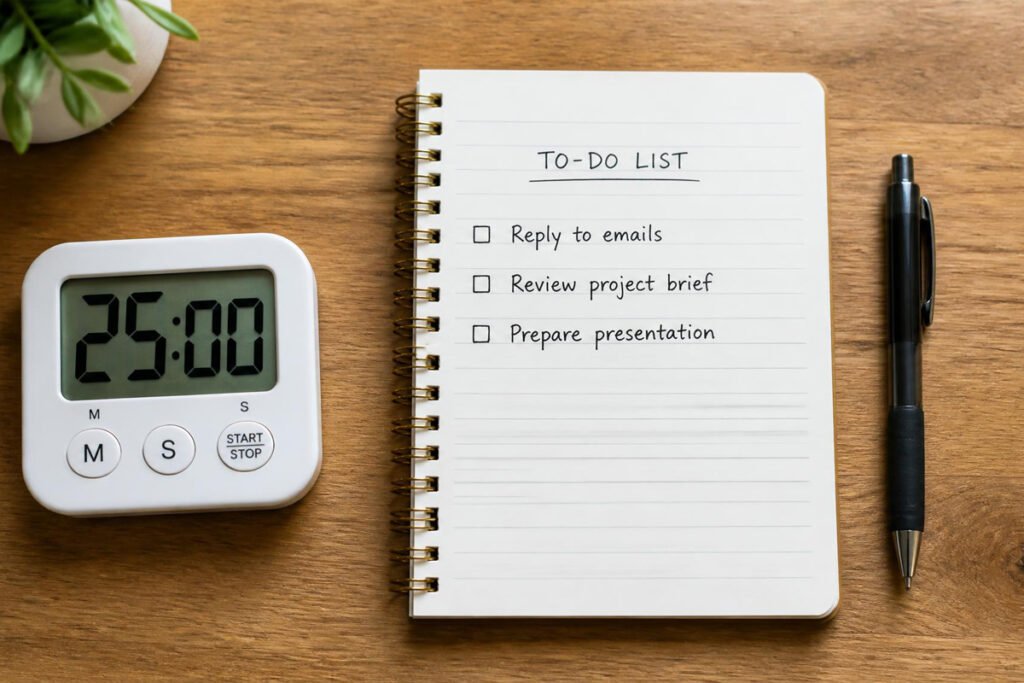
Overview: Work in focused 25-minute blocks followed by a 5-minute break. The fixed, short time window makes starting feel less overwhelming than committing to an open-ended work session.
Key Features:
- Time-boxes work into manageable, low-commitment chunks
- Built-in breaks prevent burnout during longer work sessions
- Easy to track with a simple timer or dedicated app
Best For: Tasks that feel overwhelming in scope or that require sustained focus.
Pros: ✅ Simple to implement immediately ✅ Breaks prevent the mental fatigue that fuels procrastination later in the day Cons: ❌ Rigid timing can interrupt deep flow states for some types of work
Our Verdict: Works especially well paired with a dedicated planning tool — our best time-blocking planners guide covers physical and digital options for scheduling these blocks.
3. Environmental Design
Overview: Instead of relying on willpower to resist distractions, remove them from your environment before you start. This shifts the effort from “resisting temptation” to “not having to resist in the first place.”
Key Features:
- Removing your phone from the room, not just silencing it
- Using website blockers during focused work sessions
- Setting up your workspace so the task itself is the easiest option available
Best For: People whose procrastination is heavily driven by digital distractions.
Pros: ✅ Reduces reliance on willpower, which is a limited resource ✅ One-time setup effort pays off repeatedly Cons: ❌ Requires some upfront effort to build the right environment
Our Verdict: Often the highest-leverage fix, since it addresses the trigger before it even has a chance to work. Noise and visual distraction matter here too — our noise-cancelling headphones for deep work roundup covers tools specifically for this.
4. Self-Compassion Instead of Self-Criticism
Overview: Research consistently shows that self-criticism after procrastinating increases the likelihood of procrastinating again, while self-compassion — acknowledging the slip without harsh judgment — actually reduces future procrastination.
Key Features:
- Breaks the guilt-avoidance cycle that fuels repeated procrastination
- Focuses on “what will help me start now” instead of “why did I fail again”
- Doesn’t mean lowering standards, just changing the internal tone
Best For: Anyone whose procrastination pattern includes a heavy layer of guilt or self-judgment afterward.
Pros: ✅ Directly targets the emotional root cause, not just the symptom ✅ Backed by consistent research findings Cons: ❌ Can feel counterintuitive if you believe self-criticism motivates you
Our Verdict: Often the missing piece for people who’ve tried every productivity system without success. This connects closely to the emotional patterns covered in our 10 signs of high emotional intelligence article.
Comparison Table {#comparison-table}
| Technique | Best For | Effort to Start | Root Cause Addressed |
|---|---|---|---|
| Two-Minute Rule | Starting resistance | Very low | Activation barrier |
| Pomodoro Technique | Overwhelming tasks | Low | Task scope, focus |
| Environmental Design | Digital distraction | Moderate (one-time setup) | External triggers |
| Self-Compassion | Guilt-driven avoidance | Low, but takes practice | Emotional cycle |
Overcoming Procrastination in Different Situations {#different-situations}
Work and Career Tasks
Large work projects benefit most from combining the Pomodoro Technique with environmental design — time-box the work and remove notifications during each block. If procrastination is tied to skill gaps rather than avoidance, our in-demand skills guide can help address the underlying capability issue directly.
Personal Goals and Habits
For personal goals like exercise or learning, the two-minute rule tends to work best, since the barrier is almost always starting, not capability. This lines up directly with the approach in our tiny habits guide.
Creative or Open-Ended Work
Creative tasks often trigger procrastination through perfectionism rather than boredom. Self-compassion tends to matter most here — giving yourself permission to produce a rough first draft removes the pressure that fuels avoidance.
How to Build a Procrastination-Proof Routine {#how-to-build}
Step 1: Identify the Emotion Behind the Avoidance
Before applying any technique, name what you’re actually avoiding — boredom, fear of doing it badly, overwhelm. This determines which strategy above will actually help.
Step 2: Shrink the Task Until Starting Feels Trivial
If a task still feels heavy, it’s usually still too big. Keep breaking it down until the very first step feels almost too easy to skip.
Step 3: Remove One Environmental Trigger Before You Begin
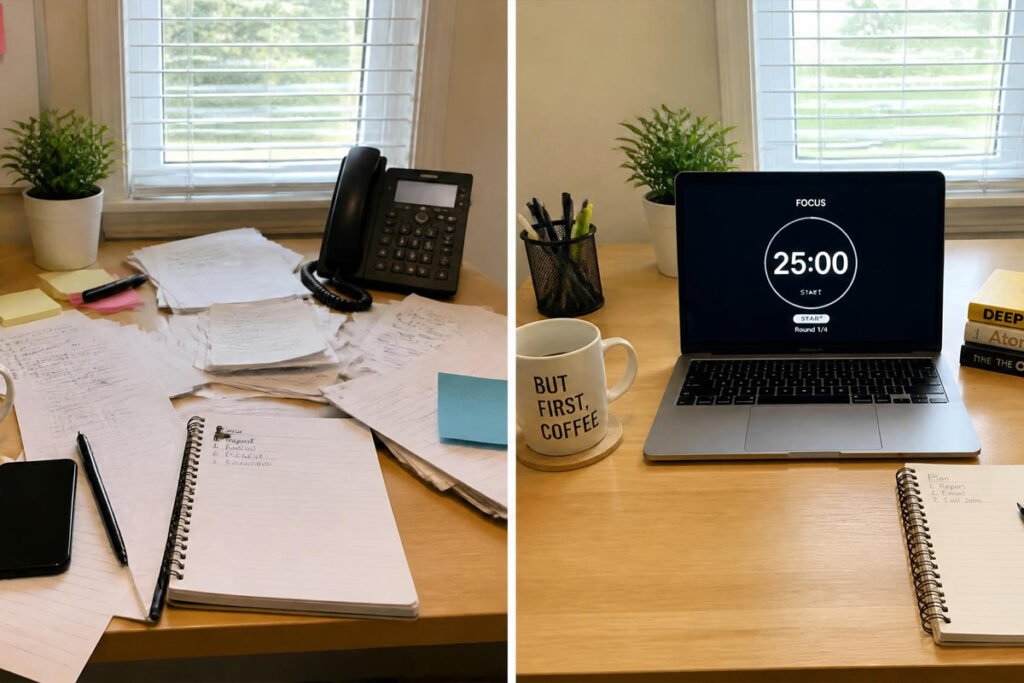
Pick the single biggest distraction — usually your phone — and physically remove it from reach before starting, rather than relying on willpower to ignore it.
Step 4: Use a Timer to Lower the Commitment
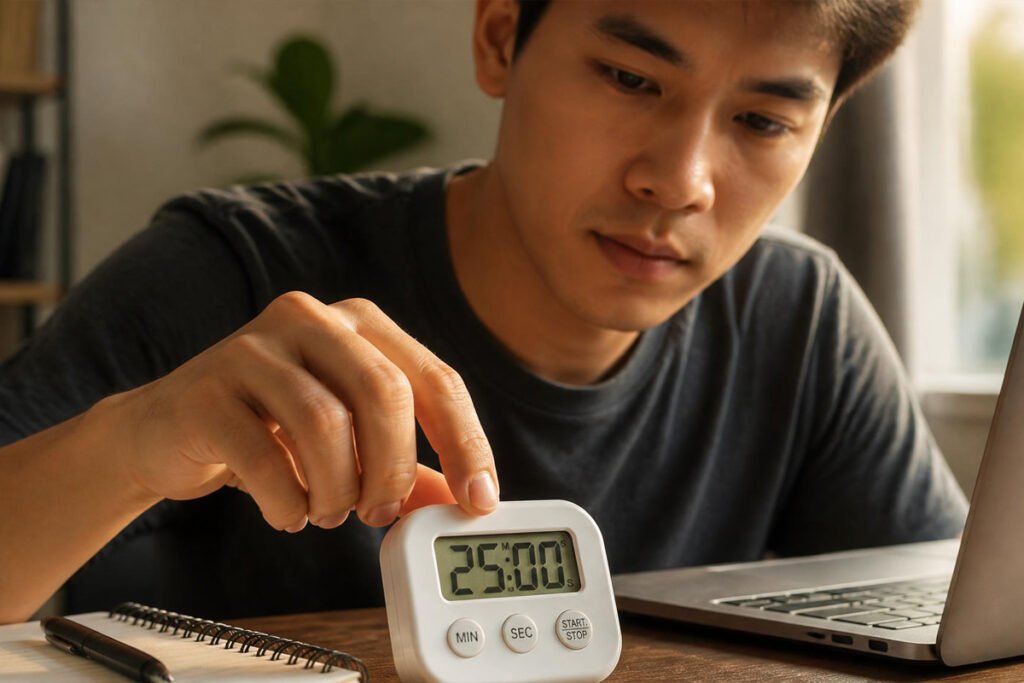
Set a Pomodoro-style timer so you’re committing to 25 minutes, not an undefined block of effort. This alone removes a surprising amount of resistance.
Step 5: Respond to Slip-Ups With Self-Compassion, Not Guilt
When you do procrastinate — and you will sometimes — treat it as information, not a character flaw. Ask what made starting hard that day, and adjust rather than spiraling into guilt.
Common Mistakes {#common-mistakes}
Relying on motivation instead of building a system. Motivation is unreliable by nature — it comes and goes regardless of how important the task is. Systems built around small, consistent triggers (see our daily habits guide) work regardless of how motivated you feel on a given day.
Punishing yourself after procrastinating. As covered above, guilt tends to fuel the exact cycle you’re trying to break. If self-criticism is a recurring pattern beyond just procrastination, our negative self-talk guide addresses this directly.
Trying to fix everything at once. Attempting to overhaul your entire routine in one day usually collapses within a week. Pick one technique from this guide, use it consistently for two weeks, then add another.
Waiting to “feel ready” before starting. Readiness is a feeling, and feelings are unreliable signals for action — most people who wait to feel motivated before starting a task end up waiting indefinitely, since the feeling of readiness often only shows up after you’ve already begun. Treating action as the trigger for motivation, rather than the other way around, is one of the most consistent findings across procrastination research.
Expert Tips {#expert-tips}
Use AI tools to lower the barrier to starting. Asking an AI assistant to help outline the first step of a task can remove the blank-page overwhelm that often triggers avoidance — our AI productivity tools for remote workers guide covers several options built for exactly this.
Pair your hardest task with your highest-energy time of day. Most people have a window — often morning — when focus comes easiest. Protect that window for the task you’re most likely to avoid, rather than defaulting to easier tasks first.
Track starts, not just completions. Instead of only measuring whether you finished a task, track whether you started it. This shifts your focus to the actual barrier — starting — rather than the outcome, which builds the habit faster.

Final Thoughts {#final-thoughts}
Best for starting resistance: the two-minute rule. Best for overwhelming projects: the Pomodoro Technique. Best for digital distraction: environmental design. Best for guilt-driven cycles: self-compassion.
Procrastination isn’t a character flaw — it’s a pattern with an identifiable cause, and every cause above has a specific, workable fix. Start with the technique that matches your actual trigger, not the one that sounds the most impressive, and revisit our tiny habits guide for more on making any of these changes stick long-term.
Frequently Asked Questions {#faq}
Is procrastination a sign of laziness? No. Research consistently links procrastination to emotion regulation, not laziness or lack of discipline — people procrastinate on tasks they genuinely care about just as often as ones they don’t.
How long does it take to break a procrastination habit? Most people notice improvement within two to three weeks of consistently applying one technique, though deeper patterns tied to perfectionism or anxiety may take longer and benefit from professional support.
Pomodoro Technique vs. just working until done — which is better? It depends on the task. Pomodoro works best for tasks that feel overwhelming or where focus tends to drift; open-ended sessions can work well once you’re already in flow and don’t need the structure.
Why do I procrastinate more on tasks I actually care about? Tasks that matter more often carry higher emotional stakes — fear of doing it badly, fear of it not being good enough — which increases avoidance even though the task itself matters to you.
Does procrastination ever require professional help? If procrastination is severe, persistent, and tied to significant anxiety, depression, or ADHD symptoms, working with a therapist or specialist can help address root causes that self-guided strategies may not fully resolve.
Can AI tools help with procrastination? Yes — AI tools can help break tasks into smaller steps, draft a starting point, or provide structure, which lowers the barrier that often triggers avoidance in the first place.
Is procrastination the same as being unproductive? Not exactly. Someone can procrastinate on one specific task while being highly productive elsewhere — procrastination is usually task-specific and tied to the emotional trigger that task creates, not an overall trait.
What’s the fastest way to start a task I’ve been avoiding for days? The two-minute rule is typically the fastest way to break through — commit to just two minutes with no pressure to continue, which usually lowers resistance enough to actually begin.
Does punishing myself for procrastinating help me stop? No — research shows self-criticism after procrastinating tends to increase the likelihood of procrastinating again, while self-compassion reduces it.
Why does procrastination get worse under deadline pressure at first, then suddenly improve right before the deadline? As a deadline nears, the anxiety of missing it eventually outweighs the discomfort of starting, which is why last-minute effort often happens — but this pattern is stressful and unreliable compared to building consistent starting habits.
Author: Jhon Last Updated: August 2026
Pingback: How to Overcome Burnout and Rebuild Your Energy: A Complete Recovery Guide | empowerquesthub