

Something goes wrong — a job falls through, a relationship ends, a plan you’d built your whole year around collapses — and some people seem to find their footing again within days, while others stay stuck for months. It’s tempting to think this comes down to personality, that some people are just “naturally resilient” and others aren’t. But resilience isn’t a fixed trait you’re born with or without. It’s closer to a skill: a set of thinking patterns and habits you can deliberately build, the same way you’d build any other capability.
That distinction matters, because it means the hard season you’re in right now isn’t a verdict on your character — it’s a gap in a specific set of tools, and those tools can be learned. If you’ve already read our piece on fixed vs. growth mindset, this article builds directly on that idea: resilience is what a growth mindset looks like in practice, under real pressure.
This guide breaks down what mental resilience actually is, the strategies backed by psychological research, and a practical process for building it — even if you’re going through something hard right now.
Quick Answer
Mental resilience is built through a combination of reframing how you interpret setbacks, maintaining supportive relationships, and practicing specific coping strategies consistently — not through simply “toughing it out.” The strongest evidence-based approaches include cognitive reframing (changing how you interpret a setback), maintaining a support network you actually use, regular stress-management practices like mindfulness, and setting small, achievable goals during hard periods to rebuild a sense of control. The one-sentence principle: resilience isn’t about avoiding difficulty or suppressing emotion — it’s about having a reliable process for moving through it.

Table of Contents
- What Is Mental Resilience, Really?
- How to Assess Your Current Resilience Level
- Proven Strategies to Build Mental Resilience
- Comparison Table
- Building Resilience for Different Life Situations
- How to Build Resilience Step by Step
- Common Mistakes
- Expert Tips
- Final Thoughts
- Frequently Asked Questions
What Is Mental Resilience, Really? {#what-is-resilience}
Mental resilience is the capacity to adapt well in the face of adversity, trauma, or significant stress — not by avoiding the difficulty, but by developing effective ways to work through it. The American Psychological Association describes resilience as a process that involves behaviors, thoughts, and actions that can be learned and developed by anyone, not a trait some people simply have and others lack (American Psychological Association).
This reframes the whole conversation. If resilience were fixed, there’d be little point in trying to build it. But because it’s built through repeated practice — the same way you’d build a habit — it responds directly to the kind of consistent, small actions covered in our 50 daily habits that can change your life in one year guide.
How to Assess Your Current Resilience Level {#how-to-assess}
Before working on resilience, it helps to know where you’re starting from. Ask yourself honestly:
1. How do I typically respond to unexpected setbacks? Do you tend to problem-solve quickly, or does it take you a long time to even acknowledge what happened?
2. Who do I actually turn to when things go wrong? Having people in your life isn’t the same as using that support — many people isolate exactly when they need connection most.
3. Do I have a consistent stress-management practice, or only reactive coping? Reactive coping (scrolling, avoiding) provides short-term relief but doesn’t build long-term capacity the way proactive practices do.
Your honest answers here point directly to which strategies below will help you most.
Proven Strategies to Build Mental Resilience {#proven-strategies}
1. Cognitive Reframing
Overview: Cognitive reframing means deliberately changing the story you tell yourself about a setback — from “this proves I’m not good enough” to “this is one data point, and I can adjust from here.” It’s one of the most researched resilience-building techniques in clinical psychology.
Key Features:
- Separates the event itself from the meaning you’ve attached to it
- Reduces the tendency to catastrophize or generalize a single setback
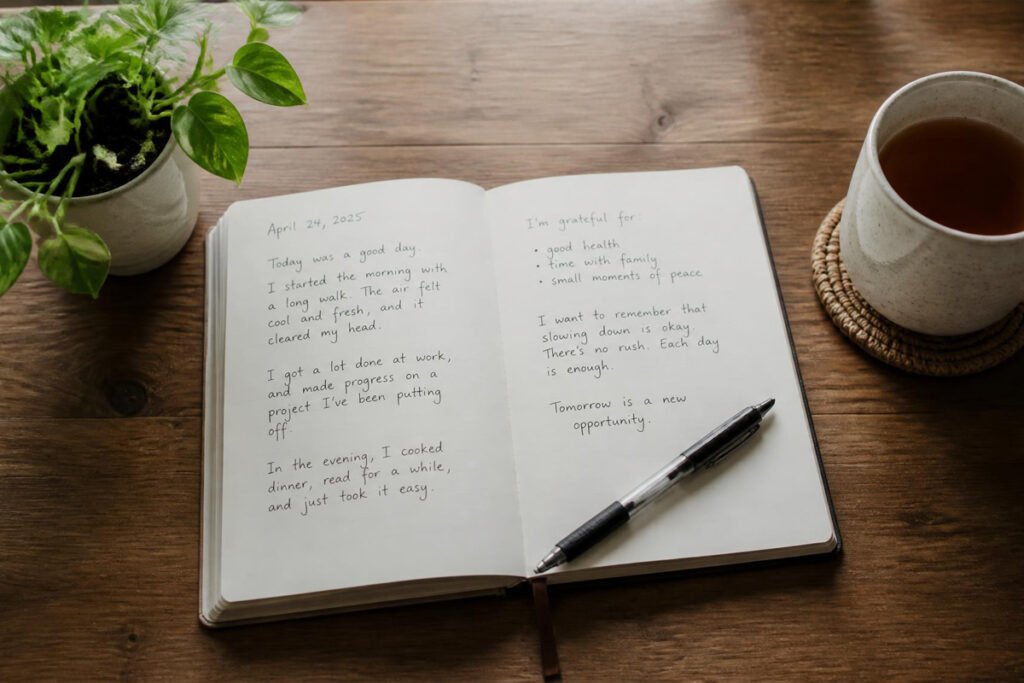
- Can be practiced through journaling or simply asking yourself “what’s another way to see this?”
Best For: Anyone whose inner monologue tends toward harsh self-judgment after mistakes or failures.
Pros: ✅ Doesn’t require any external tools or cost ✅ Backed by strong research in cognitive behavioral therapy ✅ Can be practiced anywhere, anytime Cons: ❌ Takes real practice to feel natural ❌ Not a substitute for professional support with deeper patterns
Our Verdict: The foundational skill underneath most other resilience strategies. If negative self-talk is a recurring pattern for you, our guide on breaking the habit of negative self-talk goes deeper into this specific technique.
2. Building and Actually Using a Support Network
Overview: Resilient people don’t go through hard periods alone — they have relationships they actively lean on, and just as importantly, they let themselves be helped instead of defaulting to independence.
Key Features:
- Requires identifying who in your life is genuinely safe to be vulnerable with
- Involves proactively reaching out, not waiting to be asked how you’re doing
- Can include professional support (therapy, coaching) alongside personal relationships
Best For: Anyone who tends to withdraw or “handle things alone” during hard periods.
Pros: ✅ One of the strongest predictors of resilience in psychological research ✅ Provides both emotional support and practical problem-solving help Cons: ❌ Requires vulnerability, which can feel uncomfortable at first ❌ Takes time to build if your network is currently thin
Our Verdict: Often the most under-used resilience tool, because it requires reaching out during exactly the moments you least feel like doing it. Small, consistent connection habits — covered in our 20 tiny habits that can transform your life guide — make this easier to build before you need it.
3. Regular Mindfulness and Stress-Management Practice
Overview: A consistent mindfulness or meditation practice doesn’t eliminate stress, but it changes your baseline capacity to handle it — the same way regular exercise doesn’t prevent physical strain but builds the capacity to handle it better.
Key Features:
- Lowers baseline stress reactivity over time with consistent practice
- Improves your ability to notice emotional reactions before they escalate
- Doesn’t require long sessions — even 10 minutes daily shows measurable benefit
Best For: Anyone whose stress response tends to feel immediate and overwhelming rather than manageable.
Pros: ✅ Strong research support for reducing anxiety and improving emotional regulation ✅ Flexible — can be built into small daily windows Cons: ❌ Benefits build gradually, not instantly ❌ Consistency matters more than any single session
Our Verdict: One of the easiest strategies to start today. Our best meditation apps for stress management roundup covers specific tools to make this practical rather than another good intention that fades.
4. Setting Small, Achievable Goals During Hard Periods
Overview: When life feels chaotic, resilience often comes from rebuilding a sense of control through small, completable goals — not by trying to solve everything at once.
Key Features:
- Breaks overwhelming situations into manageable next steps
- Rebuilds a sense of agency when larger circumstances feel out of your control
- Creates visible evidence of progress, which reinforces motivation
Best For: Situations where the bigger problem feels too large to act on directly.
Pros: ✅ Works even when the larger situation can’t be immediately fixed ✅ Provides quick wins that build momentum Cons: ❌ Requires discipline to keep goals genuinely small, not another source of pressure
Our Verdict: Especially useful during career setbacks — pairs well with our guide on future-proof skills companies are hiring for in 2026 if a job loss or career setback is part of what you’re navigating.

Comparison Table {#comparison-table}
| Strategy | Best For | Time to Practice | Difficulty |
|---|---|---|---|
| Cognitive Reframing | Harsh self-judgment | A few minutes, anytime | Moderate |
| Support Network | Isolation during hard times | Ongoing relationship-building | Moderate-High |
| Mindfulness Practice | Overwhelming stress reactions | 10+ minutes daily | Easy to start |
| Small Achievable Goals | Feeling out of control | Daily/weekly | Easy |
Building Resilience for Different Life Situations {#different-situations}
Career Setbacks and Job Loss
Rebuilding after a career setback often benefits most from the small-goals strategy combined with actively updating your skill set. Our in-demand skills that can help you earn more guide is a practical starting point for turning a setback into forward motion.
Relationship or Personal Loss
These situations tend to require the support-network strategy most heavily — resilience here often looks like allowing yourself to be supported rather than solving anything alone.
Chronic or Ongoing Stress
When stress isn’t a single event but an ongoing condition, consistent mindfulness practice tends to matter more than any single reframe, since the goal is lowering your baseline reactivity over time rather than processing one moment.

How to Build Resilience Step by Step {#how-to-build}
Step 1: Name What You’re Actually Dealing With
Vague stress is harder to address than a specific challenge. Write down exactly what’s difficult right now — this alone often reduces the sense of being overwhelmed.
Step 2: Choose One Strategy to Start, Not All Four
Trying to overhaul your mindset, reach out to everyone, meditate daily, and set new goals all at once usually collapses within a week. Pick the one strategy from above that addresses your biggest gap.
Step 3: Practice It in Small, Consistent Doses
Five minutes of reframing or mindfulness daily builds more real resilience than one long session once a month. Consistency is the entire mechanism here.
Step 4: Track What’s Actually Changing
Notice small shifts — recovering from a bad day faster, reaching out instead of withdrawing, feeling less consumed by a single setback. These are the real signs resilience is building.
Step 5: Layer In a Second Strategy Once the First Feels Natural
Once one practice feels automatic, add a second. Resilience compounds when multiple strategies work together rather than relying on just one.
Common Mistakes {#common-mistakes}
Treating resilience as “not feeling difficult emotions.” Real resilience isn’t suppression — it’s having a process for moving through hard emotions rather than around them. Our 10 signs of high emotional intelligence article covers how emotional awareness, not avoidance, underlies genuine resilience.
Trying to build resilience only during a crisis. The strategies above work far better as ongoing practices than as emergency measures. Building small daily habits — see our 50 daily habits guide — before you’re in crisis makes the tools available when you actually need them.
Isolating instead of reaching out. The instinct during hard periods is often to withdraw, which is exactly the opposite of what resilience research supports. If this is a recurring pattern, revisit the support-network strategy above and start with just one person.
Expert Tips {#expert-tips}
Keep a short resilience log. After a difficult moment passes, write one sentence about what helped you get through it. Over time, this becomes a personalized playbook of what actually works for you specifically, rather than generic advice.
Protect your recovery time as seriously as your productive time. Resilience isn’t built by pushing through nonstop — recovery periods matter just as much. Our best noise-cancelling headphones for deep work guide is about focus, but the same principle of protected, undistracted time applies directly to recovery and reflection.
Normalize asking for help before you’re in crisis. People who reach out easily during hard times usually practiced reaching out during smaller, lower-stakes moments first. Start small — a short check-in message, not a full crisis conversation.

Final Thoughts {#final-thoughts}
Best starting point if you’re self-critical: cognitive reframing. Best starting point if you tend to isolate: actively using your support network. Best starting point if stress feels constant: a daily mindfulness practice. Best starting point if you feel stuck: small, achievable goals to rebuild a sense of control.
Resilience isn’t about becoming someone who doesn’t struggle — it’s about becoming someone with a reliable process for moving through struggle and coming out the other side more capable than before. Revisit our fixed vs. growth mindset guide alongside this one; the two work together as a foundation for handling whatever 2026 brings your way.
Frequently Asked Questions {#faq}
Is mental resilience something you’re born with, or can it be learned? It can be learned. Psychological research consistently shows resilience is built through practiced behaviors and thought patterns, not a fixed personality trait.
How long does it take to build mental resilience? There’s no fixed timeline, but most people notice meaningful shifts within a few weeks of consistent practice, with deeper changes building over several months.
Cognitive reframing vs. positive thinking — what’s the difference? Positive thinking often means forcing an optimistic outlook regardless of reality. Cognitive reframing means honestly reassessing a situation for a more accurate, less catastrophized interpretation — it’s a more grounded, evidence-based approach.
What if I’ve tried building resilience and it’s not working? If setbacks consistently feel unmanageable despite consistent effort, it may be time to work with a therapist or counselor, who can help address deeper patterns that self-guided strategies alone may not resolve.
Is it healthy to just push through difficult emotions instead of processing them? No — resilience research specifically distinguishes healthy coping from avoidance. Suppressing emotions tends to increase stress over time rather than build genuine resilience.
Can building resilience help with workplace stress specifically? Yes. The same core strategies — reframing, support networks, stress management, and small achievable goals — apply directly to career setbacks and workplace pressure.
Do resilient people not feel afraid or anxious during hard times? They do. Resilience isn’t the absence of fear or anxiety — it’s having a way to function and recover despite feeling those emotions.
How is resilience different from just “toughness”? Toughness often implies suppressing emotion and pushing through alone. Resilience involves emotional awareness, support-seeking, and adaptive coping — a more sustainable and research-backed approach.
What’s the single most important resilience strategy to start with? There’s no universal answer — it depends on your specific gap. Someone who isolates benefits most from support-network work; someone who’s self-critical benefits most from cognitive reframing.
Can children and teens build resilience the same way adults do? The same core principles apply, though the specific strategies are often adapted to be age-appropriate, with more emphasis on modeling from trusted adults and building supportive environments.
Author: Jhon Last Updated: August 2026
A note on this topic: This article discusses mental resilience and coping strategies in a general, educational context. If you’re currently going through a genuinely difficult time, these strategies are a helpful starting point, but they aren’t a replacement for professional support — a therapist or counselor can offer guidance tailored to your specific situation.