

There’s a particular kind of frustration that comes from knowing you’re capable and not feeling it. You’ve done the work, you have the experience, and yet the moment it counts — the meeting, the interview, the difficult conversation — a familiar voice shows up asking if you’re really ready for this. Most advice about confidence treats it like a switch you either have or don’t, which makes the whole thing feel even more out of reach when you’re the one still waiting to flip it.
Here’s what actually helps: confidence isn’t a feeling you wait to arrive before acting. It’s a byproduct of a specific pattern — evidence, action, and how you interpret both — that you can build deliberately, the same way you’d build any other capability. If you’ve already read our guide on breaking the habit of negative self-talk, this article picks up where that one leaves off: once you’ve quieted the harshest inner critic, this is how you actively build something sturdier in its place.
This guide covers what self-confidence actually is psychologically, the strategies with the strongest evidence behind them, and a step-by-step process to build it — even if self-doubt has been running the show for a long time.
Quick Answer
Self-confidence is built through a cycle of small, achievable actions that generate real evidence of competence, combined with how you interpret that evidence afterward. The most effective strategies include practicing “evidence collection” — actively tracking proof of your capability instead of relying on memory alone — using body language and posture to influence internal state, preparing thoroughly enough that competence itself does the reassuring, and reframing failure as data rather than a verdict on your worth. The one-sentence principle: confidence follows action, it doesn’t precede it — waiting to feel ready before acting usually means waiting indefinitely.

Table of Contents
- What Self-Confidence Actually Is (and Isn’t)
- How to Identify What’s Really Driving Your Self-Doubt
- Proven Strategies to Build Self-Confidence
- Comparison Table
- Building Confidence for Different Situations
- How to Build Lasting Confidence Step by Step
- Common Mistakes
- Expert Tips
- Final Thoughts
- Frequently Asked Questions
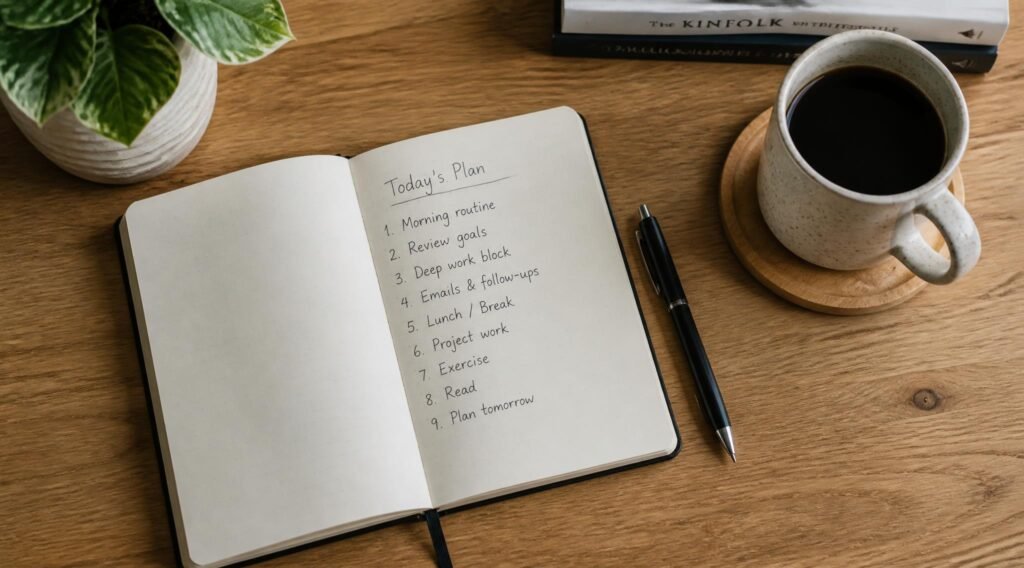
What Self-Confidence Actually Is (and Isn’t) {#what-confidence-is}
Psychologists distinguish self-confidence from self-esteem: self-esteem is a general sense of your own worth, while self-confidence is a more specific belief in your ability to succeed at a particular task or in a particular situation, which is why someone can feel confident presenting to a room but doubt themselves completely in a new relationship. Research on self-efficacy — a closely related concept — shows it’s built primarily through direct mastery experiences (actually doing the thing successfully), not through pep talks or positive thinking alone (American Psychological Association).
This matters because it reframes the whole approach. If confidence were just a mindset, affirmations would be enough. Because it’s built through actual competence and evidence, the strategies that work look more like deliberate practice than motivational quotes. This connects closely to what we covered in our fixed vs. growth mindset guide — confidence grows fastest in people who treat their abilities as buildable rather than fixed.
How to Identify What’s Really Driving Your Self-Doubt {#identify-doubt}
Before applying any strategy, get specific about where your self-doubt actually comes from:
1. Is this doubt about a specific skill, or about your worth overall? “I haven’t practiced public speaking enough” calls for a very different fix than “I don’t think I deserve to be here” — the first is a skill gap, the second is closer to self-esteem work.
2. Does the doubt show up in one area of life or everywhere? Situational self-doubt (new job, new skill) usually responds well to evidence-building. Pervasive self-doubt across most areas of life often has deeper roots worth exploring with a therapist or counselor.
3. What do I actually tell myself right before the moment I need confidence most? Most people can name the exact sentence their inner critic uses. Naming it is the first step to challenging it.

Proven Strategies to Build Self-Confidence {#proven-strategies}
1. Evidence Collection
Overview: Instead of relying on memory to convince yourself you’re capable, actively keep a running record of proof — completed projects, positive feedback, problems you’ve solved. Self-doubt thrives on selective memory that forgets your wins and magnifies your mistakes; evidence collection counters that directly.
Key Features:
- Creates a tangible, reviewable record instead of relying on how you happen to feel that day
- Counters the negativity bias that makes failures feel more memorable than successes
- Can be as simple as a running note on your phone or a dedicated journal
Best For: Anyone whose self-doubt gets worse specifically because they can’t remember their own track record in the moment.
Pros: ✅ Simple to start immediately, no special tools required ✅ Directly counters the memory bias that fuels most self-doubt Cons: ❌ Requires consistency to build a meaningful record over time
Our Verdict: One of the fastest wins on this list — most people are shocked by how much evidence they already have once they actually write it down. This pairs naturally with the reflection practices covered in our best AI journaling apps guide.
2. Preparation That Does the Reassuring
Overview: A lot of confidence advice focuses on mindset tricks, but one of the most reliable ways to feel confident going into something is simply being genuinely prepared. Thorough preparation replaces the need to talk yourself into confidence, because the competence is already there.
Key Features:
- Shifts the source of confidence from self-talk to actual readiness
- Reduces the uncertainty that self-doubt tends to fill with worst-case scenarios
- Works for interviews, presentations, difficult conversations, and skill-based performance alike
Best For: Situations with a specific, knowable outcome you can prepare for in advance.
Pros: ✅ Produces confidence that doesn’t depend on your mood that day ✅ Directly improves your actual performance, not just your feeling about it Cons: ❌ Doesn’t help with more general, situational self-doubt that isn’t tied to a specific event
Our Verdict: Especially powerful for career-related confidence — pairs well with our guide on future-proof skills, since genuine skill-building is one of the most durable confidence sources there is.
3. Posture and Physical State
Overview: Research on the connection between body and mind suggests that physical posture can influence internal emotional state — standing tall and taking up space tends to correlate with feeling more confident, not just appearing that way to others.
Key Features:
- Immediate, low-effort technique you can use right before a high-stakes moment
- Works alongside other strategies rather than replacing them
- Simple to practice: shoulders back, chin level, unhurried movements
Best For: In-the-moment confidence right before a specific event, like a presentation or interview.
Pros: ✅ Takes seconds to apply, no preparation needed ✅ Can be combined with any other strategy on this list Cons: ❌ Provides a temporary boost, not a substitute for deeper confidence-building
Our Verdict: A useful short-term tool, best used as a supplement to evidence collection and preparation rather than a standalone fix.
4. Reframing Failure as Data
Overview: People with durable confidence don’t fail less than everyone else — they interpret failure differently, treating it as useful information about what to adjust rather than proof they shouldn’t have tried.
Key Features:
- Separates the outcome of an attempt from your overall competence or worth
- Makes it easier to keep taking action after setbacks instead of avoiding future risks
- Directly ties into the cognitive reframing techniques used in resilience-building
Best For: Anyone whose confidence collapses significantly after a single setback or mistake.
Pros: ✅ Prevents one bad outcome from derailing future attempts ✅ Builds resilience alongside confidence Cons: ❌ Takes conscious practice to apply in the heat of a real disappointment
Our Verdict: This strategy overlaps closely with what we covered in our guide on building mental resilience — the two skills reinforce each other directly.

Comparison Table {#comparison-table}
| Strategy | Best For | Speed of Effect | Effort Required |
|---|---|---|---|
| Evidence Collection | Forgetting your own track record | Builds over weeks | Low, but needs consistency |
| Preparation | Specific known events | Immediate for that event | Moderate-High |
| Posture & Physical State | In-the-moment boosts | Instant | Very low |
| Reframing Failure | Setback-driven confidence collapse | Builds over time | Moderate |
Building Confidence for Different Situations {#different-situations}
Career and Workplace Confidence
Workplace confidence tends to respond best to preparation and evidence collection combined — thorough prep for the specific moment, backed by a running record of past wins to draw on. Our 10 best soft skills books guide covers resources specifically focused on this combination.
Social and Relationship Confidence
Social confidence often has less to do with preparation and more to do with reframing — specifically, separating a single awkward moment or rejection from your overall worth. The failure-as-data reframe tends to matter most here.
Confidence After a Major Setback
Rebuilding confidence after a significant setback — a job loss, a failed project — usually requires resilience work first. Our guide on mental resilience is a useful starting point before layering confidence-specific strategies on top.

How to Build Lasting Confidence Step by Step {#how-to-build}
Step 1: Start an Evidence Log Today
Don’t wait for a big win to start tracking. Write down three things you’ve handled competently in the past month, even small ones — this is your starting baseline.
Step 2: Pick One Upcoming Situation to Prepare For Thoroughly
Choose a specific event where confidence matters — a meeting, a conversation, a presentation — and prepare more thoroughly than feels strictly necessary. Let the preparation do the reassuring instead of trying to talk yourself into confidence.
Step 3: Practice Physical Confidence Cues Before the Moment
In the minutes before the event, consciously adjust your posture and breathing. This is a small step, but it’s immediate and requires no other preparation.
Step 4: Debrief Afterward, Regardless of Outcome
Whether it went well or not, write down what you learned. This builds the evidence log further and reinforces the failure-as-data mindset even after a setback.
Step 5: Repeat With Slightly Bigger Challenges Over Time
Confidence compounds. Once a challenge feels manageable, deliberately choose a slightly bigger one next time, so the evidence base keeps expanding.
Common Mistakes {#common-mistakes}
Waiting to feel confident before taking action. As covered in our guide on procrastination, waiting for a feeling to arrive before acting usually means waiting indefinitely — confidence tends to follow action, not precede it.
Comparing your evidence log to someone else’s highlight reel. Confidence is built on your own track record, not a comparison to other people’s visible successes, which rarely include their setbacks or self-doubt.
Treating a single failure as proof you shouldn’t try again. This is the exact pattern the failure-as-data strategy addresses. If this pattern feels persistent, our guide on negative self-talk covers the underlying inner-critic dynamic in more depth.
Expert Tips {#expert-tips}
Keep your evidence log somewhere you’ll actually see it again. A note buried in an app you never open won’t help in the moment you need it most. Consider using AI journaling tools that can resurface past entries when you need a reminder of your own track record.
Build confidence in low-stakes situations before you need it in high-stakes ones. Practice the preparation and reframing strategies on smaller moments first, so the pattern feels familiar when something bigger is on the line.
Notice the difference between confidence and certainty. You don’t need to be certain of the outcome to act confidently — confidence is about trusting your ability to handle whatever happens, not knowing in advance that it will go well.
[IMAGE 6 — Final Result | Alt text: “Person feeling genuinely confident after building self-trust”]
Final Thoughts {#final-thoughts}
Best for forgetting your own track record: evidence collection. Best for specific high-stakes events: thorough preparation. Best for an immediate boost: posture and physical state. Best for setback-driven doubt: reframing failure as data.
Real confidence isn’t the absence of self-doubt — it’s having enough evidence, preparation, and a healthier relationship with failure that the doubt doesn’t get the final say. Revisit our mental resilience guide alongside this one; the two skills build on each other directly as you head into whatever 2026 asks of you.
Frequently Asked Questions {#faq}
Is self-confidence something you’re born with, or can it be built? It can be built. Research on self-efficacy shows confidence develops primarily through direct experience and mastery, not innate personality traits.
How long does it take to build genuine self-confidence? Most people notice small shifts within a few weeks of consistent evidence-collection and preparation practice, with more durable confidence building over several months of repeated experience.
What’s the difference between self-confidence and arrogance? Confidence is a grounded belief in your ability based on real evidence; arrogance often involves overestimating ability without evidence, or dismissing others to compensate for insecurity. The two aren’t the same thing at all.
Can affirmations alone build self-confidence? Not reliably on their own. Research suggests affirmations work best when paired with real action and evidence, not as a standalone strategy — repeating a statement you don’t yet believe rarely changes deep-seated doubt.
Why do I feel confident in some areas of life but not others? This is normal and expected — self-confidence is typically situation-specific, built through direct experience in that particular domain, rather than a single trait that applies everywhere equally.
Does low self-confidence ever require professional support? If self-doubt is pervasive, persistent, and significantly affecting daily functioning or relationships, working with a therapist can help address deeper patterns that self-guided strategies alone may not fully resolve.
How is self-confidence different from self-esteem? Self-esteem is a general sense of your own worth; self-confidence is a more specific belief in your ability to succeed at particular tasks or situations. You can work on one without directly affecting the other.
Can preparation really replace the need to feel confident? It doesn’t replace confidence entirely, but thorough preparation reduces the uncertainty that self-doubt often fills in, which is why it’s one of the most reliable confidence strategies for specific, known events.
What’s the fastest way to feel more confident right before a big moment? Adjusting your posture and breathing provides the fastest, most immediate shift, though it works best combined with genuine preparation rather than as a standalone fix.
Why does my confidence disappear after a single mistake? This usually reflects an all-or-nothing interpretation of failure. Practicing the failure-as-data reframe — treating the mistake as useful information rather than a verdict — helps prevent one setback from erasing all prior evidence of competence.
Author: Jhon Last Updated: August 2026
A note on this topic: This article discusses confidence-building strategies in a general, educational context. If self-doubt feels persistent, overwhelming, or tied to deeper struggles, these strategies are a helpful starting point, but a therapist or counselor can offer support tailored to your specific situation.