

You set the alarm early. You promised yourself this would be the week you finally stuck to the plan — the workout, the writing session, the inbox at zero by five. And then Tuesday happens. The alarm gets snoozed once, which becomes twice, and by Thursday the plan quietly dissolves into “I’ll restart Monday.”
If that cycle sounds familiar, you’re not short on motivation — you’re short on structure. Motivation is a feeling, and feelings are unreliable by design; they show up when they want to and vanish under stress, exactly when you need them most. Self-discipline is different. It’s not a personality trait some people are born with and others aren’t — it’s closer to a skill, built the same way you’d build any other: through repeated, deliberate practice, not white-knuckled willpower. It’s also the missing piece for a lot of people who’ve already worked on how to stop procrastinating but still find consistency hard to sustain once the initial burst of motivation fades.
This guide breaks down what actually builds lasting self-discipline — not vague pep talks, but specific, repeatable strategies you can start using today.
Quick Answer
Self-discipline is built through environment design, not willpower alone. The most effective approach combines four things: removing friction from the behaviors you want (and adding friction to the ones you don’t), attaching new habits to existing routines, setting up accountability that doesn’t rely on your mood, and building recovery into the plan so one missed day doesn’t become a spiral. People who “seem” naturally disciplined have usually just automated more of these systems than most — they’re relying on structure, not raw willpower, to get through the moments motivation runs out.
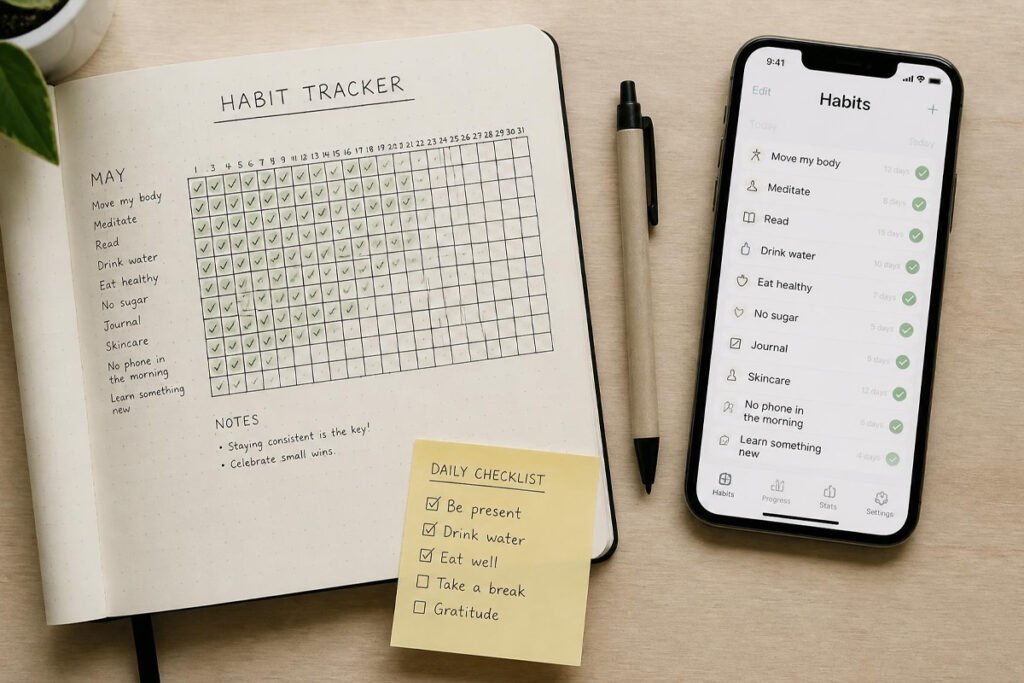
Table of Contents
- What Self-Discipline Actually Is (And Isn’t)
- How to Choose the Right Strategy for You
- Core Strategies to Build Self-Discipline
- Strategy Comparison
- Building Self-Discipline for Different Life Areas
- How to Start Building Self-Discipline This Week
- Common Mistakes
- Expert Tips
- Final Thoughts
- Frequently Asked Questions
What Self-Discipline Actually Is (And Isn’t) {#what-is-self-discipline}
Self-discipline is the ability to act in line with your longer-term goals even when your in-the-moment impulses point somewhere else. Psychologists often describe it as a form of self-regulation — the capacity to delay gratification, resist an immediate temptation, and follow through on a commitment made by your “past self” even when your “present self” would rather not.
What it isn’t is a fixed trait you either have or lack. That belief — that some people are just naturally more disciplined — tends to become a self-fulfilling story, similar to the pattern behind a fixed versus growth mindset: believing a trait is unchangeable makes you less likely to build the systems that would actually change it.
It’s also worth separating self-discipline from sheer force of will. Relying purely on willpower is exhausting and unreliable, because willpower behaves like a limited daily resource — it depletes with decision fatigue, stress, and poor sleep. The people who appear effortlessly disciplined have usually just engineered their environment and routines so that the disciplined choice requires less willpower in the first place. That’s a structural difference, not a character one, and it connects directly to the kind of mental resilience that helps people recover quickly after a setback instead of spiraling.
How to Choose the Right Strategy for You {#how-to-choose}
Before picking a specific technique, ask yourself three questions:
1. Is my problem starting, or sustaining? Some people struggle to begin a task (this overlaps heavily with procrastination) while others start fine but can’t sustain the behavior past a week or two. The right strategy differs for each — starting problems respond well to friction reduction, while sustaining problems respond better to accountability systems.
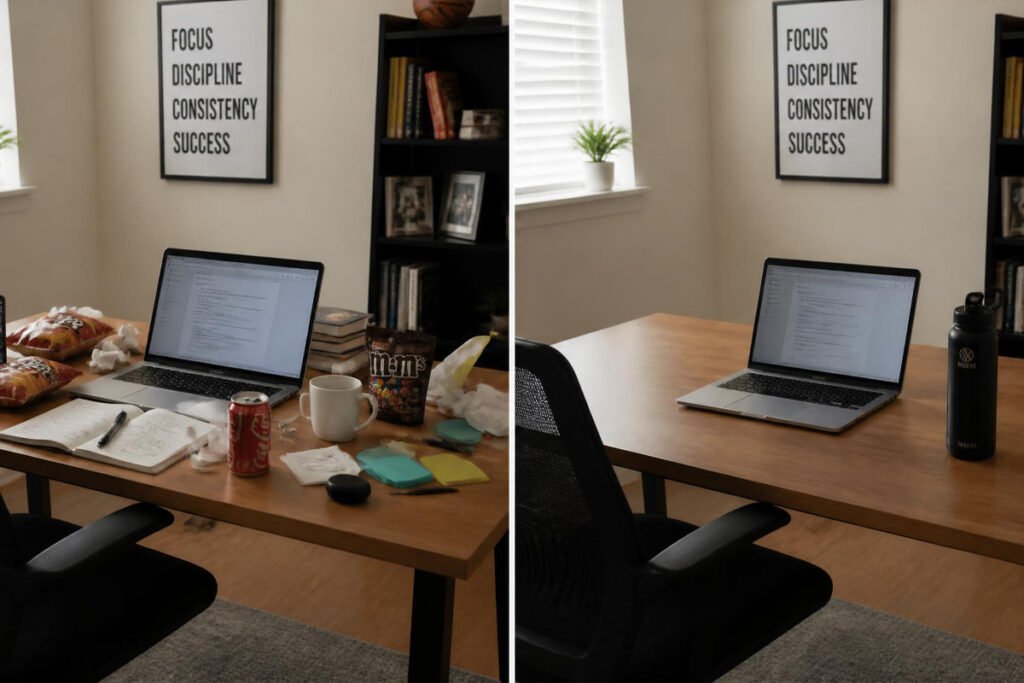
2. What’s actually derailing me — environment or emotion? If you keep breaking your own plans because of external triggers (your phone, a messy desk, a chaotic schedule), environment design will help more than any mindset shift. If it’s emotional — stress, self-criticism, boredom — you’ll get more out of addressing the underlying negative self-talk first.
3. How much daily bandwidth do I realistically have? According to research summarized by the American Psychological Association, self-control functions less like an unlimited trait and more like a finite resource that fluctuates with stress, sleep, and decision load — which means a strategy that assumes unlimited daily willpower is set up to fail. Build a system sized to your actual capacity, not your best day.
Core Strategies to Build Self-Discipline {#core-strategies}
1. Environment Design (Friction Removal)
Overview: Instead of relying on willpower to resist temptation, restructure your physical and digital environment so the disciplined choice is the easy one. This might mean deleting distracting apps from your phone’s home screen, laying out gym clothes the night before, or closing every browser tab except the one you need.
How It Works:
- Identify the exact moment your discipline usually breaks (opening a specific app, walking past a specific snack)
- Add friction to that exact trigger — a locked drawer, a logged-out account, a different room
- Simultaneously reduce friction on the behavior you want more of
Best For: People whose discipline breaks down due to impulsive, in-the-moment decisions rather than long-term motivation.
Why It Works: ✅ Doesn’t rely on mood or motivation ✅ Effects compound — once the environment is set, it works passively ✅ Pairs naturally with time-blocking planners that structure your physical day
Watch Out For: ❌ Requires an upfront setup investment ❌ Needs periodic re-adjustment as your triggers shift over time
2. Habit Stacking
Overview: Attach a new behavior you want to build directly onto an existing habit that already runs on autopilot — after your morning coffee, immediately do the disciplined task, rather than trying to remember it as a standalone item.
How It Works:
- Identify a habit you already do consistently, every single day, without fail
- Attach the new behavior immediately before or after it
- Keep the new behavior small enough that it takes under two minutes at first
Best For: Building consistency from scratch, especially for people who forget or deprioritize new habits amid a busy day.
Why It Works: ✅ Uses an existing automatic behavior as a trigger, removing the need to “remember” ✅ Small starting size lowers resistance ✅ Compounds naturally — this is the same principle behind tiny habits that transform your life
Watch Out For: ❌ Stacking too many new habits onto one trigger at once tends to collapse the whole chain ❌ Needs a genuinely consistent anchor habit to work
3. Accountability Systems
Overview: Build in a mechanism — a person, a group, or a tracking tool — that notices whether you followed through, independent of how motivated you feel that day. Discipline sustained purely through internal willpower tends to erode under stress; external accountability catches you when internal motivation doesn’t show up.
How It Works:
- Choose an accountability method that has a real, visible cost to skipping (a check-in partner, a public commitment, a tracking app with a streak)
- Make the check-in frequent enough to catch a slip early, not so frequent it becomes a burden
- Review your track record on a set schedule rather than only when things go wrong
Best For: People who follow through more reliably when someone or something else is watching, or who tend to rationalize skipping when no one notices.
Why It Works: ✅ Doesn’t depend on daily motivation ✅ Catches small slips before they become full derailments ✅ Modern tools make this easier than ever — see our breakdown of the best AI habit-tracking apps
Watch Out For: ❌ Accountability that feels punitive rather than supportive tends to backfire ❌ Requires choosing a partner or tool you’ll actually engage with consistently
4. Implementation Intentions (“If-Then” Planning)
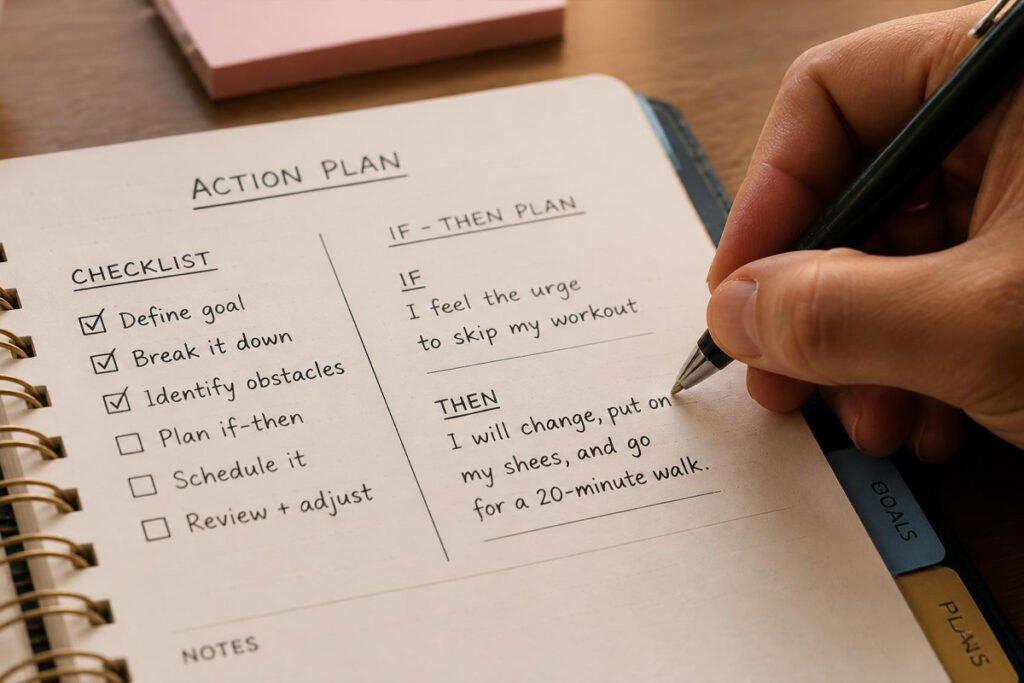
Overview: Rather than a vague goal (“I’ll exercise more”), pre-decide exactly what you’ll do when a specific obstacle shows up: “If it’s raining on my run day, then I’ll do a 20-minute home workout instead.” This removes the need to make a willpower-draining decision in the moment.
How It Works:
- Identify the two or three most likely obstacles to your plan
- For each one, write a specific “if-then” response in advance
- Review the plan before the situation is likely to occur, not after
Best For: People who do well with a plan but consistently get derailed by predictable obstacles (bad weather, a busy day, low energy).
Why It Works: ✅ Removes real-time decision fatigue ✅ Converts vague intentions into concrete action triggers ✅ Reduces the odds of an all-or-nothing collapse when the first obstacle hits
Watch Out For: ❌ Only works if the “if-then” plan is genuinely realistic, not aspirational ❌ Needs occasional updating as circumstances change
5. Recovery Protocols (Planning for Slips)
Overview: The strategy most people skip — deciding in advance how you’ll respond when you inevitably miss a day, rather than letting one missed day spiral into abandoning the whole plan. Discipline isn’t about a perfect streak; it’s about how quickly you return after a break.
How It Works:
- Set a personal rule in advance: “One missed day is just a missed day — I never miss twice in a row”
- Remove any self-punishment ritual tied to missing a day; it tends to increase avoidance, not reduce it
- Treat the return, not the streak, as the actual measure of discipline
Best For: Perfectionist-leaning people whose all-or-nothing thinking turns a single slip into a full abandonment of the goal.
Why It Works: ✅ Prevents one bad day from becoming a lost month ✅ Reduces the shame spiral that often follows a missed goal, connecting directly to the same patterns behind breaking negative self-talk ✅ Makes long-term consistency realistic instead of theoretical
Watch Out For: ❌ Can be misused as an excuse to skip more often if the “one missed day” rule isn’t taken seriously ❌ Requires genuine self-honesty about whether you’re recovering or just rationalizing
Strategy Comparison {#comparison-table}
| Strategy | Best For | Setup Effort | Time to See Results | Pairs Well With |
|---|---|---|---|---|
| Environment Design | Impulsive, in-the-moment slips | Medium (one-time setup) | Immediate | Time-blocking planners |
| Habit Stacking | Building consistency from zero | Low | 1–3 weeks | Existing morning/evening routines |
| Accountability Systems | Motivation that fades without oversight | Medium | 2–4 weeks | Habit-tracking apps |
| Implementation Intentions | Predictable, recurring obstacles | Low | Immediate | Weekly planning sessions |
| Recovery Protocols | Perfectionist all-or-nothing thinking | Low | Ongoing | Reframing negative self-talk |
Building Self-Discipline for Different Life Areas {#different-areas}
For Work and Career Discipline
If your discipline gap shows up most at work — missed deadlines, procrastinated projects, an inbox that never empties — pair environment design (closing distracting tabs, silencing notifications during focus blocks) with implementation intentions for your most common workplace obstacles. This combination compounds well with the mindset shifts behind in-demand skills that help you earn more, since career growth usually depends on consistent follow-through more than any single skill.
For Health and Fitness Discipline
Physical habits respond especially well to habit stacking and recovery protocols, since missed workouts are one of the most common places all-or-nothing thinking derails an otherwise solid plan. Treating a missed gym day the same way you’d treat any other recovery protocol — as a single missed day, not a failed plan — keeps momentum intact far better than restarting from scratch.
For Emotional and Mental Discipline
If your discipline struggles are less about tasks and more about emotional regulation — reacting instead of responding, giving in to negative spirals — accountability and recovery protocols matter more than environment design. This overlaps closely with the practices behind building mental resilience, where the goal isn’t avoiding setbacks entirely but recovering from them faster each time.
How to Start Building Self-Discipline This Week {#how-to-start}
Step 1: Pick One Behavior, Not Five
Choose a single behavior to build discipline around first. Trying to overhaul five habits simultaneously is one of the most common reasons a new system collapses within two weeks.
Step 2: Identify Your Real Trigger Point
Spend a day simply noticing the exact moment your discipline typically breaks — is it a specific time of day, a specific feeling, a specific location? You can’t redesign around a trigger you haven’t actually identified.
Step 3: Redesign the Environment Around That Trigger
Apply friction removal or addition directly at that trigger point, rather than relying on a general resolution to “try harder” next time.
Step 4: Attach the Habit to an Existing Routine
Stack the new behavior onto something you already do every day without fail, keeping the initial version small enough to complete even on a bad day.
Step 5: Set Your Recovery Rule in Advance
Before you start, decide exactly how you’ll respond to a missed day. Having this decided ahead of time — rather than improvised in a moment of guilt — is what keeps one slip from becoming a full reset.
Common Mistakes {#common-mistakes}
Relying entirely on motivation instead of building structure. Motivation is useful for starting something, but it’s an unreliable engine for sustaining it — which is exactly why people who’ve already worked through procrastination often still struggle with consistency a few weeks later, once the initial motivational spike fades.
Trying to build too many disciplined habits at once. Willpower and attention are limited resources; spreading them across five new behaviors simultaneously usually means none of them stick. Start with one, the same principle behind tiny habits that transform your life.
Treating a single missed day as proof the plan failed. This all-or-nothing thinking is one of the biggest derailers of long-term discipline, and it’s closely tied to the same negative self-talk patterns that undermine consistency in other areas of life.
Expert Tips {#expert-tips}
Lower the starting bar until the habit is automatic, then raise it. A two-minute version of a habit that actually happens every day builds more real discipline than an ambitious version you only complete half the time.
Track the behavior, not just the outcome. Tracking “did I show up” is a better discipline metric early on than tracking results, since outcomes lag behind consistency by weeks and can make an otherwise-working system feel like it’s failing.
Review your systems monthly, not just your goals. Goals tell you what you want; systems tell you whether your current setup is actually getting you there. A monthly check-in on your environment, stacking, and accountability setup catches problems before they compound.
Final Thoughts {#final-thoughts}
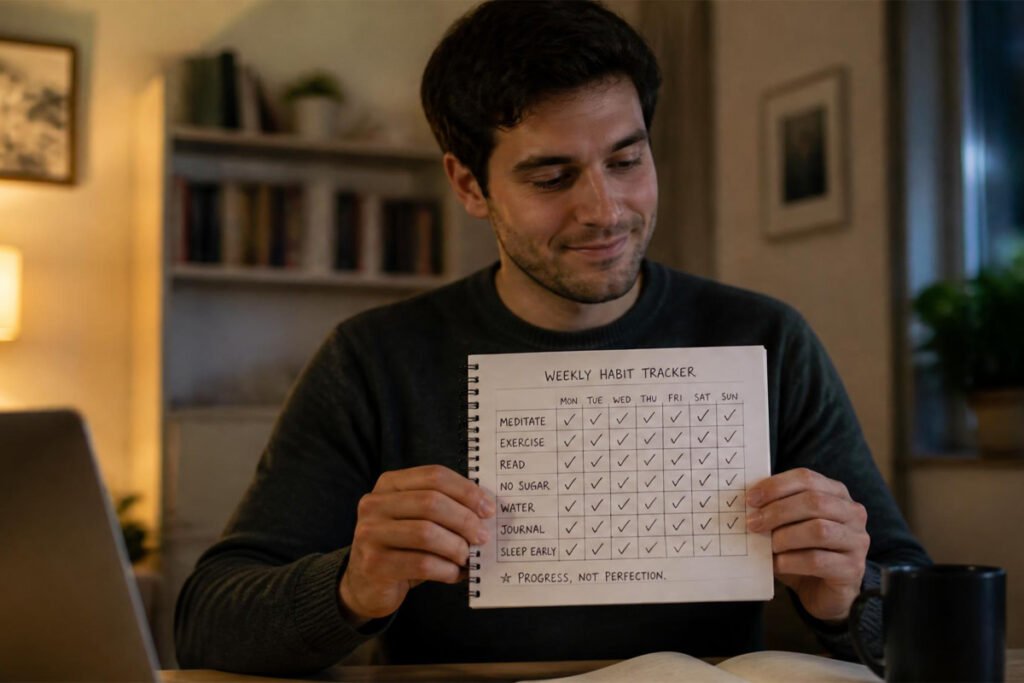
Best overall approach: combine environment design with habit stacking — removing friction from good behaviors while attaching them to routines you already run on autopilot. Best for accountability-driven people: pair a tracking system with a real check-in partner. Best for perfectionists: start with a recovery protocol before anything else, since all-or-nothing thinking is often the real barrier, not lack of a plan.
Self-discipline isn’t a trait you either have or don’t — it’s a system you build, one deliberate structural choice at a time. If you’re working on this alongside a broader personal-growth routine, these strategies pair naturally with the consistency principles behind 50 daily habits that can change your life and the resilience skills covered in how to build mental resilience — together they cover the structure, the mindset, and the recovery that lasting discipline actually requires.
Frequently Asked Questions {#faq}
Do I need natural willpower to build self-discipline, or can anyone learn it? Anyone can build it. Self-discipline behaves more like a trainable skill than a fixed trait — the people who seem naturally disciplined have usually just built more automatic systems, not more raw willpower.
How long does it take to build real self-discipline in a new area? Most people see early consistency within two to three weeks of consistent habit stacking, though it varies by person and behavior. Environment design changes can show effects immediately, while accountability systems typically take a few weeks to prove their value.
Environment design vs. accountability systems — which should I start with? Start with environment design if your discipline breaks down from impulsive, in-the-moment temptations. Start with accountability if your discipline breaks down gradually over days or weeks as motivation fades. Many people eventually use both together.
Why do I keep breaking promises to myself even when I really want to change? This is usually a structural problem, not a character flaw — it typically means the plan relies too heavily on willpower and not enough on environment, routine, or accountability. Redesigning the system, rather than trying harder with the same approach, is usually what fixes it.
Is it normal to miss days even with a good self-discipline system? Yes — missing an occasional day is normal and expected, even for people with strong systems. What separates lasting discipline from a failed attempt is usually how quickly you return, not whether you ever miss a day.
Can self-discipline become exhausting or unhealthy if I push it too hard? Yes, if it’s built purely on willpower and self-criticism rather than sustainable systems. Long-term discipline should feel more like a well-designed routine than a constant internal fight — if it consistently feels like the latter, it’s worth revisiting your approach rather than pushing harder.
Does self-discipline improve with better sleep and stress management? Yes — self-control functions as a limited daily resource that’s directly affected by sleep quality, stress levels, and decision fatigue, so improving those areas often improves discipline indirectly, even without changing your habit strategy at all.
What’s the difference between self-discipline and self-control? The terms are often used interchangeably. Self-control usually refers to resisting an immediate impulse in a single moment, while self-discipline typically refers to the broader, sustained pattern of consistent follow-through over time.
Author: Jhon Last Updated: August 2026
Pingback: How to Overcome Burnout and Rebuild Your Energy: A Complete Recovery Guide | empowerquesthub